Keyword: cyanobacteria
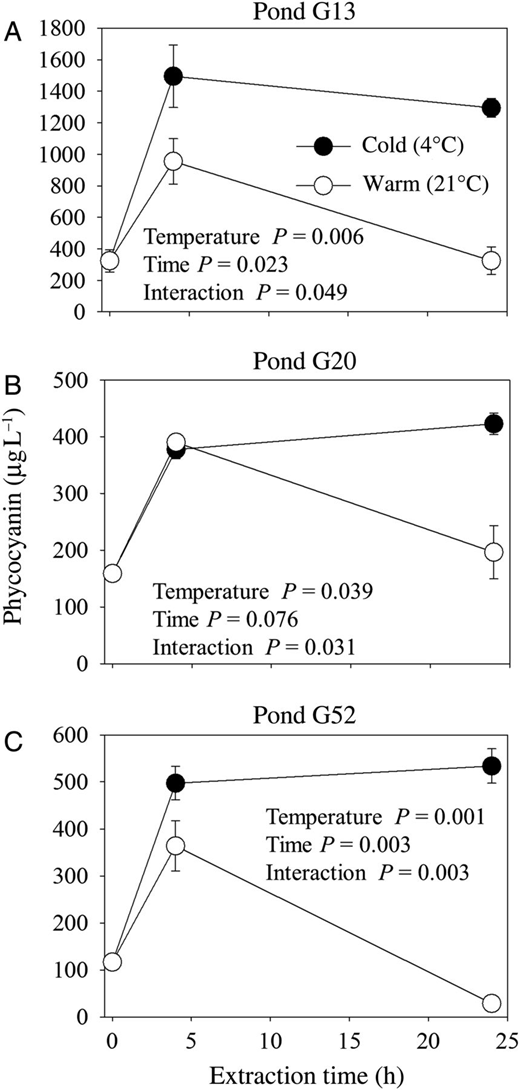
Kasinak, J.-M. E., B. M. Holt, M. F. Chislock, and A. E. Wilson. 2015. Benchtop fluorometry of phycocyanin as a rapid approach for estimating cyanobacterial biovolume. Journal of Plankton Research 37(1):248-257.
Abstract
Cyanobacteria are the primary taxa responsible for freshwater harmful algal blooms (HABs), with several genera capable of producing potent intracellular toxins and off-flavor compounds. There is considerable growing interest in methods to rapidly quantify cyanobacteria in water samples. Past studies have demonstrated poor correlations between phycocyanin in vivo fluorescence and cyanobacterial cell densities. We conducted a series of laboratory experiments aimed at refining a protocol that uses benchtop fluorometry to measure the cyanobacterial pigment, phycocyanin, to accurately estimate cyanobacterial biovolume. In our study, we found strong correlations between phycocyanin concentration and cyanobacterial biovolume (but not for cell densities) both within and across ponds, which varied widely in productivity and algal diversity. Thus, benchtop fluorometry of phycocyanin is a viable method for water resource managers to quickly estimate cyanobacterial biovolume.
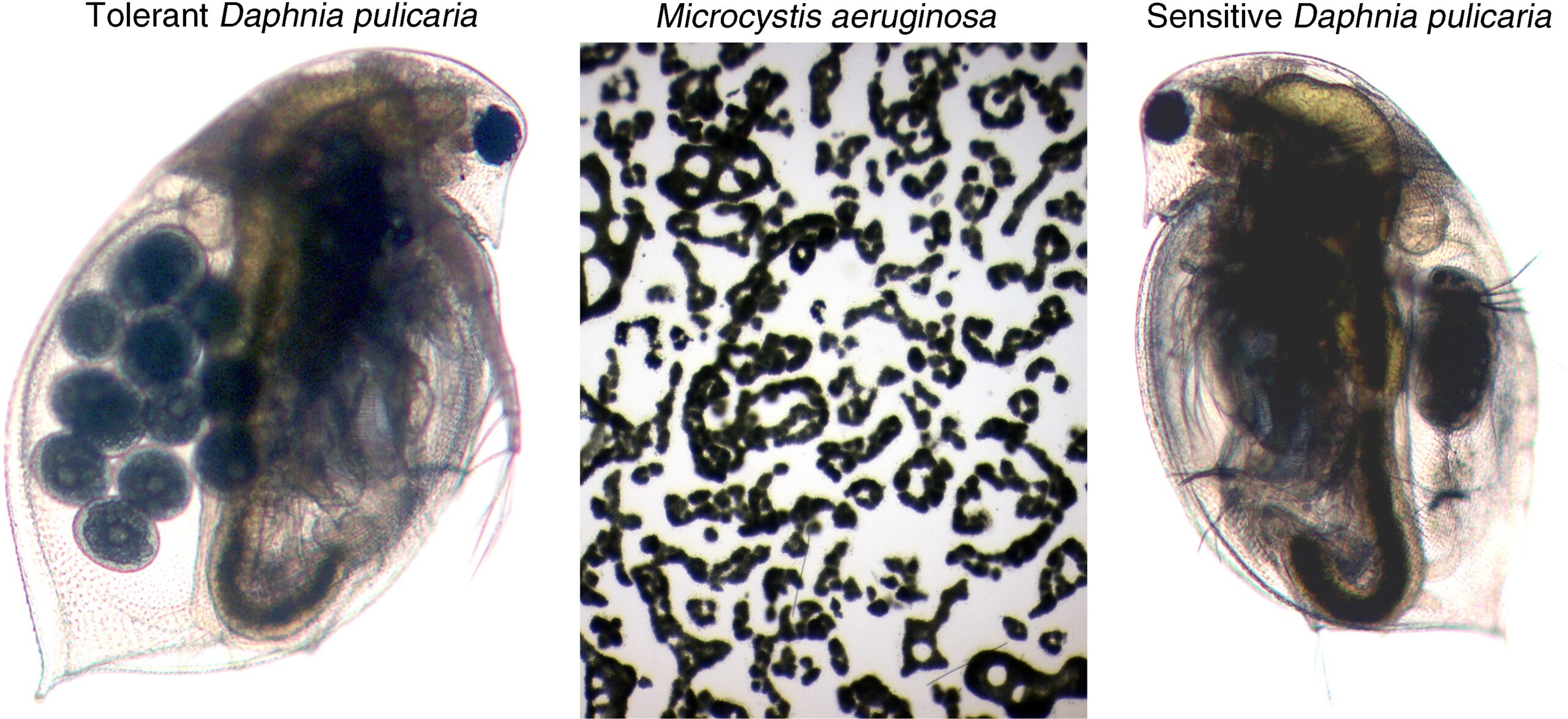
Chislock, M. F., O. Sarnelle, B. K. Olsen, E. Doster, and A. E. Wilson. 2013. Large effects of consumer offense on ecosystem structure and function. Ecology 94(11):2375-2380.
Abstract
Study of the role of within-species adaptation in ecological dynamics has focused largely on prey adaptations that reduce consumption risk (prey defense). Few, if any, studies have examined how consumer adaptations to overcome prey defenses (consumer offense) affect ecosystem structure and function. We manipulated two sets of genotypes of a planktonic herbivore (Daphnia pulicaria) in a highly productive ecosystem with abundant toxic prey (cyanobacteria). The two sets of consumer genotypes varied widely in their tolerance of toxic cyanobacteria in the diet (i.e., sensitive vs. tolerant). We found a large effect of tolerant D. pulicaria on phytoplankton biomass and gross primary productivity but no effect of sensitive genotypes, this result stemming from genotype-specific differences in population growth in the presence of toxic prey. The former effect was as large as effects seen in previous Daphnia manipulations at similar productivity levels. Thus, we demonstrated that the effect of consumer genotypes with contrasting offensive adaptations was as large as the effect of consumer presence/absence.
Kozlowsky-Suzuki, B., A. E. Wilson, and A. Ferrao-Filho. 2012. Biomagnification or biodilution of microcystins in aquatic foodwebs? Meta-analyses of laboratory and field studies. Harmful Algae 18:47-55
Abstract
Cyanobacteria, conspicuous photoprokaryotes in aquatic ecosystems, may produce secondary metabolites such as the hepatotoxins, microcystins (MC). While MC have been quantified in numerous aquatic consumers across a variety of ecosystems, there is still debate whether biomagnification or biodilution of MC generally occurs in aquatic foodwebs. Given the threat that MC pose to aquatic foodwebs, livestock, and humans, we synthesized data from 42 studies on the concentration of MC in consumers, such as zooplankton, decapods, molluscs, fishes, turtles and birds, to determine the dominant process. To compare results across studies, we calculated the biomagnification factor (BMF) as the ratio between the MC concentration measured in consumers and their diet. Biomagnification is indicated when BMF mean and associated 95% confidence intervals (CI) >1. Biodilution is shown if a BMF mean and 95% CI <1. As expected, increasing concentrations of MC in diets resulted in increasing concentrations of MC in consumers. Nevertheless, biodilution of MC was evident for most primary consumers. This finding was robust across four datasets that focused on different aspects of data independence and variance, and may be explained by low hydrophobicity of MC, diet preferences, or detoxification. Zooplankton and zooplanktivorous fish, however, showed some potential for biomagnification (i.e. mean BMF > 1). Plausible, but largely unexplored, possibilities for the relatively higher MC accumulation by these consumers are low detoxification efficiency by zooplankton, MC trophic transfer via the microbial foodweb, contamination of zooplankton net samples with large cyanobacterial colonies and filaments, or the release of both free and bound MC in zooplankton during digestion by fish. Factors related to study design may have influenced the magnitude of MC biodilution. For example, consumers fed diets consisting of highly toxic cyanobacterial lab cultures and large, potentially inedible net phytoplankton showed greater biodilution when compared to seston. Given their hepatotoxic nature, MC concentrations were relatively higher in liver and hepatopancreas tissues than other tissues. Whole organisms exhibited, however, relatively greater MC (i.e. higher BMF) than specific tissues, and this finding could be attributed to the contribution of zooplankton to whole organism MC analyses (89% of BMF estimates > 1). Finally, BMF was positively related to study length showing that longer exposure to toxic food resulted in higher MC accumulation in consumers, which could have important implications in eutrophic or tropical systems where toxic blooms may persist year-round.
Berry, J. P., E. Lee, K. Walton, A. E. Wilson, and F. Bernal-Brooks. 2011. Microcystin production by a persistent cyanobacterial bloom in Lago de Patzcuaro (Michiacan, Mexico) and apparent bioaccumulation of the toxin in small commercial catches of fish. Environmental Toxicology and Chemistry 30(7):1621-1628.
Abstract
Lago de Patzcuaro is a historically important freshwater fishery in Mexico. The lake is presently characterized by a persistent bloom of cyanobacteria, specifically dominated by recognized producers of toxic microcystins (MCYSTs). We evaluated MCYSTs in sestonic and dissolved fractions of the water column, as well as representative fish species (silversides, Chirostoma spp.; Goodea sp.; and carp, Cyprinus carpio) obtained from local markets and small commercial catches during the bloom. Samples were evaluated primarily by enzyme-linked immunosorbent assay (ELISA), and secondarily by protein phosphatase (PPase) inhibition assay and liquid chromatography-mass spectrometry (LC-MS). Sestonic MCYST concentration (0.02-0.36 µg/L) generally correlated inversely with distance from the bloom, supporting the bloom as the source of the toxin. Several MCYST variants, including MC-LR, -LA and -LY, as well as didemethyl variants, were identified by LC-MS/MS analysis. All three species of fish bioaccumulated MCYSTs in relevant tissues, and toxin content correlated with trophic level, with highest and lowest levels measured in phytoplanktivorous and zooplanktivorous representatives, respectively. Detection of MCYST in silversides and Goodea sp. is particularly relevant because both are consumed in their entirety, including viscera (e.g., liver) known to primarily accumulate MCYST. These results indicate that Lago de Patzcuaro is indeed characterized by a toxigenic bloom, and that commercially important fish species from the lake accumulate toxic MCYST in tissues relevant to human consumption. As such, this system may represent an ideal model of the trophic transfer of MCYSTs and its relevance to human and environmental health.
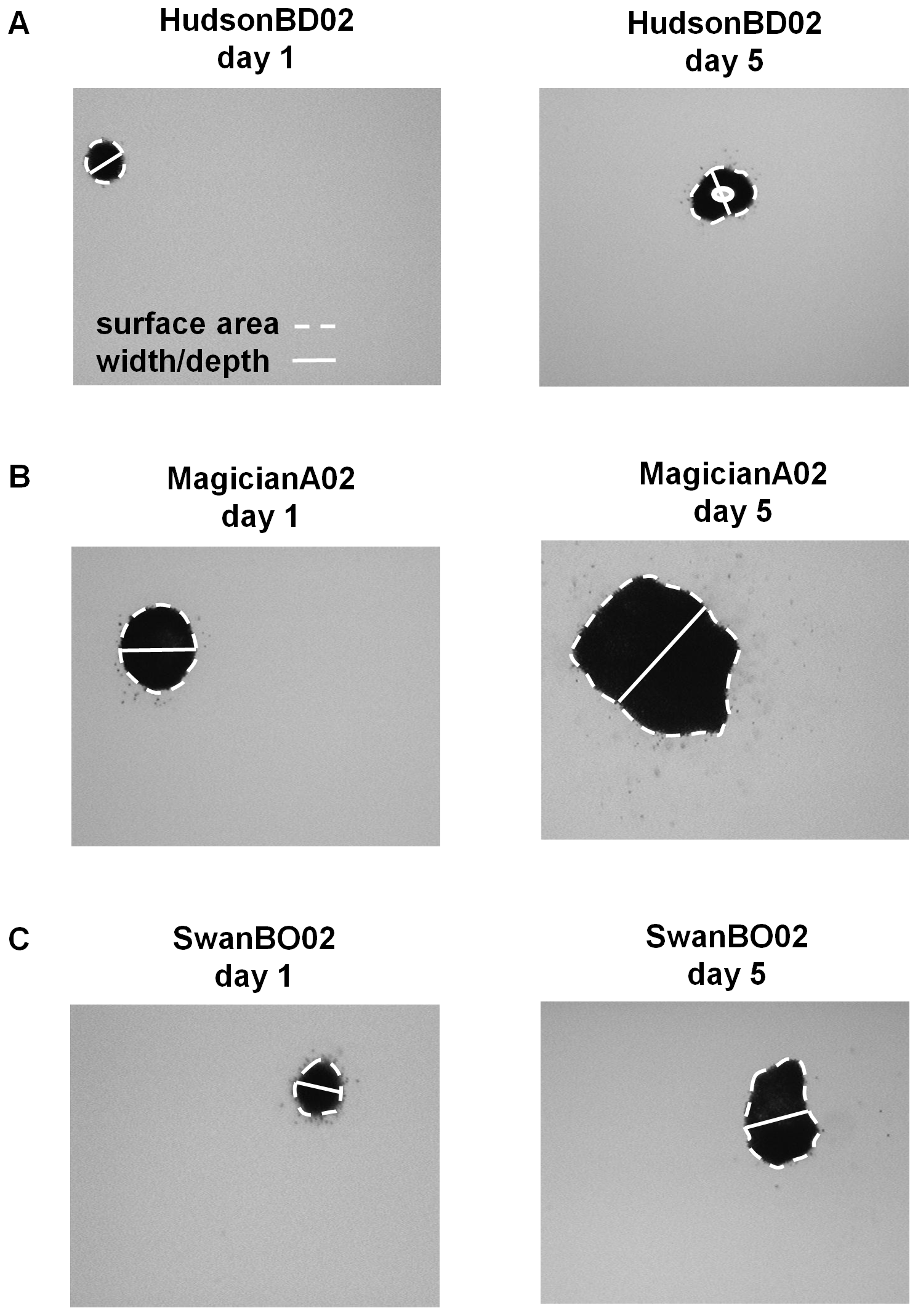
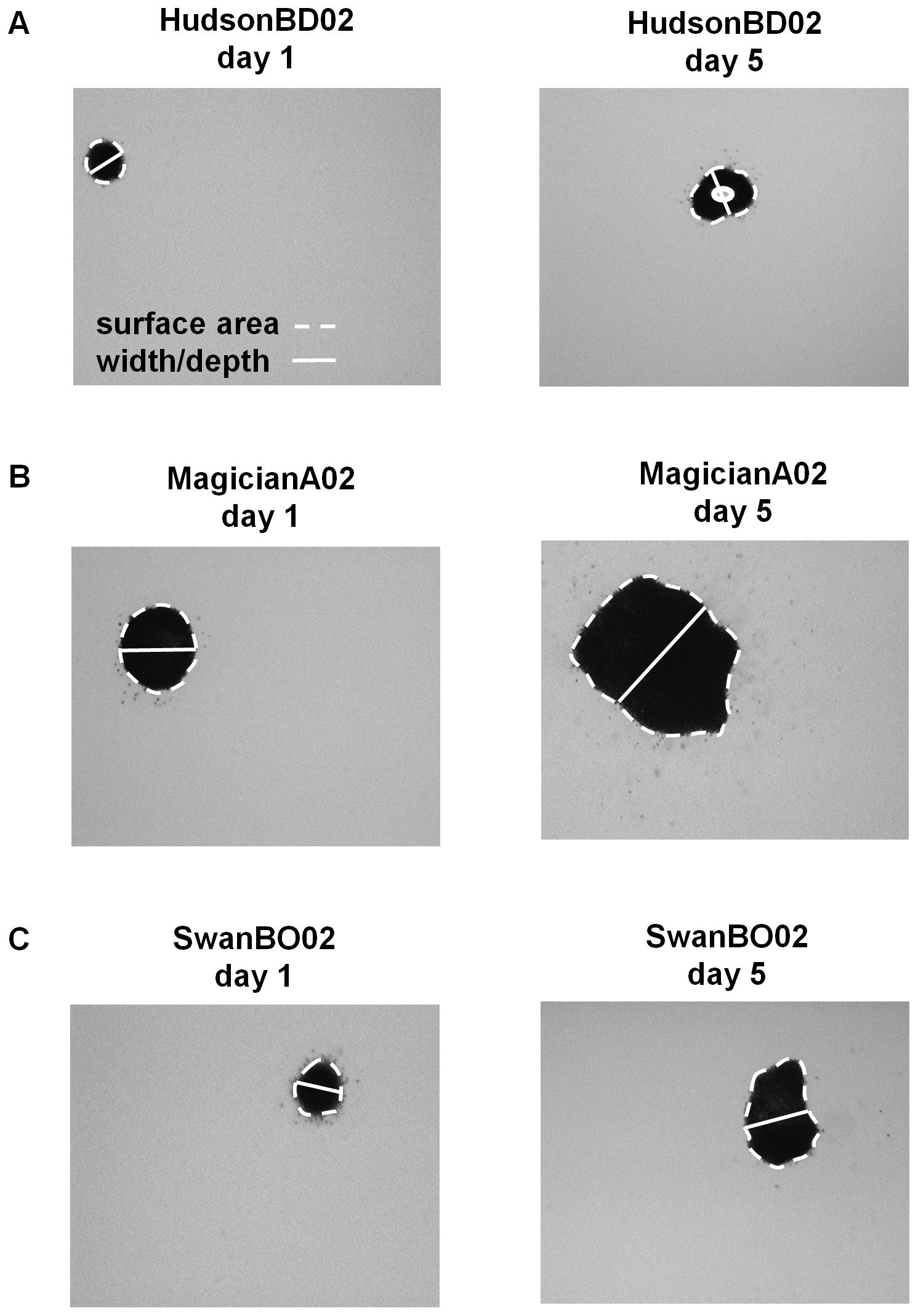
Wilson, A. E., R. B. Kaul, and O. Sarnelle. 2010. Growth rate consequences of coloniality in a harmful phytoplankter. PLoS ONE 5(1):e8679.
Abstract
Background
Allometric studies have shown that individual growth rate is inversely related to body size across a broad spectrum of organisms that vary greatly in size. Fewer studies have documented such patterns within species. No data exist directly documenting the influence of colony size on growth rate for microscopic, colonial organisms.
Methodology/Principal Findings
To determine if similar negative relationships between growth rate and size hold for colonial organisms, we developed a technique for measuring the growth of individual colonies of a bloom-forming, toxic cyanobacterium, Microcystis aeruginosa using microscopy and digital image analysis. For five out of six genotypes of M. aeruginosa isolated from lakes in Michigan and Alabama, we found significant negative relationships between colony size and growth rate. We found large intraspecific variation in both the slope of these relationships and in the growth rate of colonies at a standard size. In addition, growth rate estimates for individual colonies were generally consistent with population growth rates measured using standard batch culture.
Conclusions/Significance
Given that colony size varies widely within populations, our results imply that natural populations of colonial phytoplankton exist as a mosaic of individuals with widely varying ecological attributes (since size strongly affects growth rate, grazing mortality, and migration speed). Quantifying the influence of colony size on growth rate will permit development of more accurate, predictive models of ecological interactions (e.g., competition, herbivory) and their role in the proliferation of harmful algal blooms, in addition to increasing our understanding about why these interactions vary in strength within and across environments.
Knoll, L. B., O. Sarnelle, S. K. Hamilton, C. E. H. Kissman, A. E. Wilson, J. B. Rose, and M. R. Morgan. 2008. Invasive zebra mussels (Dreissena polymorpha) increase cyanobacterial toxin concentrations in low-nutrient lakes. Canadian Journal of Fisheries and Aquatic Sciences 65(3):448-455.
Abstract
We investigated whether concentrations of the cyanobacterial toxin microcystin were positively associated with Dreissena polymorpha invasion by conducting surveys of 39 inland lakes in southern Michigan with low to moderate total phosphorus concentrations (≤20 μg·L-1). Lakes with D. polymorpha had 3.3 times higher microcystin concentrations and 3.6 times higher biomass of Microcystis aeruginosa (a major producer of microcystin) than comparable lakes without D. polymorpha. In contrast, the biomass of Anabaena spp. (another potential producer of microcystin) was 4.6 times higher in lakes without D. polymorpha. We also conducted a large-scale enclosure manipulation of D. polymorpha density in Gull Lake, a low-nutrient lake containing D. polymorpha. The experiment revealed a positive effect of D. polymorpha on microcystin concentrations and M. aeruginosa biomass. The congruence between survey and experimental results provides strong evidence that D. polymorpha invasion causes an increase in toxin concentrations in lakes with low to moderate nutrients. An increase in M. aeruginosa biomass may negatively impact food webs and public health because microcystins are known to be toxic to aquatic and terrestrial organisms.
Wilson, A. E. and M. E. Hay. 2007. A direct test of cyanobacterial chemical defense: Variable effects of microcystin-treated food on two Daphnia pulicaria clones. Limnology and Oceanography 52(4):1467-1479.
Abstract
To determine the direct effects of microcystin on the fitness of herbivorous zooplankton, we experimentally added microcystin-LR to freeze-dried cells of palatable Chlorella and fed these compound-treated cells to two clones of Daphnia pulicaria that had shown differing responses to a diet containing a strain of Microcystis aeruginosa that produces microcystin. The Daphnia that performed better on a diet containing live Microcystis showed reduced population growth when exposed to microcystin-LR-treated Chlorella, whereas the Daphnia that performed poorly on the diet containing live Microcystis was not affected by the experimental diet containing microcystin-LR. This is the first study to unambiguously show that some Daphnia strains are and some strains are not harmed by the consumption of microcystin-LR. These surprising results were not generated by interference from lipophilic secondary metabolites in Microcystis. When the crude lipophilic extract of Microcystis was added to dried Chlorella cells, it enhanced the fitness of both Daphnia clones. We hypothesize that the Daphnia clone more tolerant to live cells may upregulate resistance when cued by the presence of the live Microcystis cells, but not by microcystin-LR alone. Alternatively, the Daphnia clone that grew well on a diet containing live Microcystis may sequester compounds from Microcystis that defend the cyanobacteria from autotoxicity; these compounds would have been unavailable to Daphnia consuming freeze-dried Chlorella treated with microcystin-LR alone. Thus, microcystin-LR can suppress Daphnia fitness when consumed; however, the effects of microcystin vary across clones of herbivorous zooplankton and the consequences of this variance should not be overlooked when considering zooplankton-cyanobacteria interactions.
Sarnelle, O. and A. E. Wilson. 2005. Local adaptation of Daphnia pulicaria to toxic cyanobacteria. Limnology and Oceanography 50(5):1565-1570.
Abstract
We quantified within-species variation in the tolerance of the large, lake-dwelling daphnid, Daphnia pulicaria, to toxic cyanobacteria in the diet. Juvenile growth rates on diets consisting of 100% Ankistrodesmus falcatus (a nutritious green alga) or 100% Microcystis aeruginosa (toxic) were compared for D. pulicaria clones isolated from lakes expected to have low and high levels of bloom-forming cyanobacteria during summer. Growth rates of clones isolated from high-nutrient lakes (range of total phosphorus, 31-235 °g L−1) were higher, and showed less relative inhibition, on the cyanobacterial diet compared to clones isolated from low-nutrient lakes (range of total phosphorus, 9-13 °g L-1). Our results suggest that D. pulicaria populations exposed to high cyanobacterial levels over long periods of time can adapt to being more tolerant of toxic cyanobacteria in the diet.
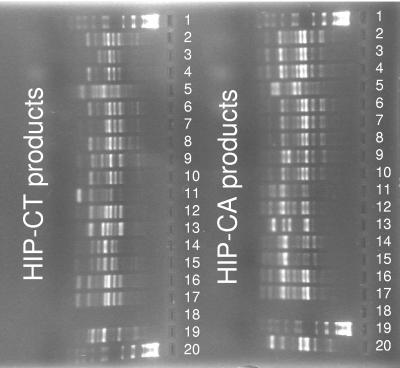
Wilson, A. E., O. Sarnelle, B. A. Neilan, T. P. Salmon, M. M. Gehringer, and M. E. Hay. 2005. Genetic variation of the bloom-forming cyanobacterium Microcystis aeruginosa within and among lakes: Implications for harmful algal blooms. Applied and Environmental Microbiology 71(10):6126-6133.
Abstract
To measure genetic variation within and among populations of the bloom-forming cyanobacterium Microcystis aeruginosa, we surveyed a suite of lakes in the southern peninsula of Michigan that vary in productivity (total phosphorus concentrations of approximately 10 to 100 microg liter(-1)). Survival of M. aeruginosa isolates from lakes was relatively low (i.e., mean of 7% and maximum of 30%) and positively related to lake total phosphorus concentration (P = 0.014, r2 = 0.407, n = 14). In another study (D. F. Raikow, O. Sarnelle, A. E. Wilson, and S. K. Hamilton, Limnol. Oceanogr. 49:482-487, 2004), survival rates of M. aeruginosa isolates collected from an oligotrophic lake (total phosphorus of approximately 10 mug liter(-1) and dissolved inorganic nitrogen:total phosphorus ratio of 12.75) differed among five different medium types (G test, P of <0.001), with higher survival (P = 0.003) in low-nutrient media (28 to 37% survival) than in high-nutrient media. Even with the relatively low isolate survivorship that could select against detecting the full range of genetic variation, populations of M. aeruginosa were genetically diverse within and among lakes (by analysis of molecular variance, Phi(sc) = 0.412 [Phi(sc) is an F-statistic derivative which evaluates the correlation of haplotypic diversity within populations relative to the haplotypic diversity among all sampled populations], P = 0.001), with most clones being distantly related to clones collected from lakes directly attached to Lake Michigan (a Laurentian Great Lake) and culture collection strains collected from Canada, Scotland, and South Africa. Ninety-one percent of the 53 genetically unique M. aeruginosa clones contained the microcystin toxin gene (mcyA). Genotypes with the toxin gene were found in all lakes, while four lakes harbored both genotypes possessing and genotypes lacking the toxin gene.