Citation
Wilson, A. E. and E. G. Fernandez-Figueroa. 2018. Preparing water resource managers to identify and measure toxic cyanobacteria. Streamlines Spring 2018:18.
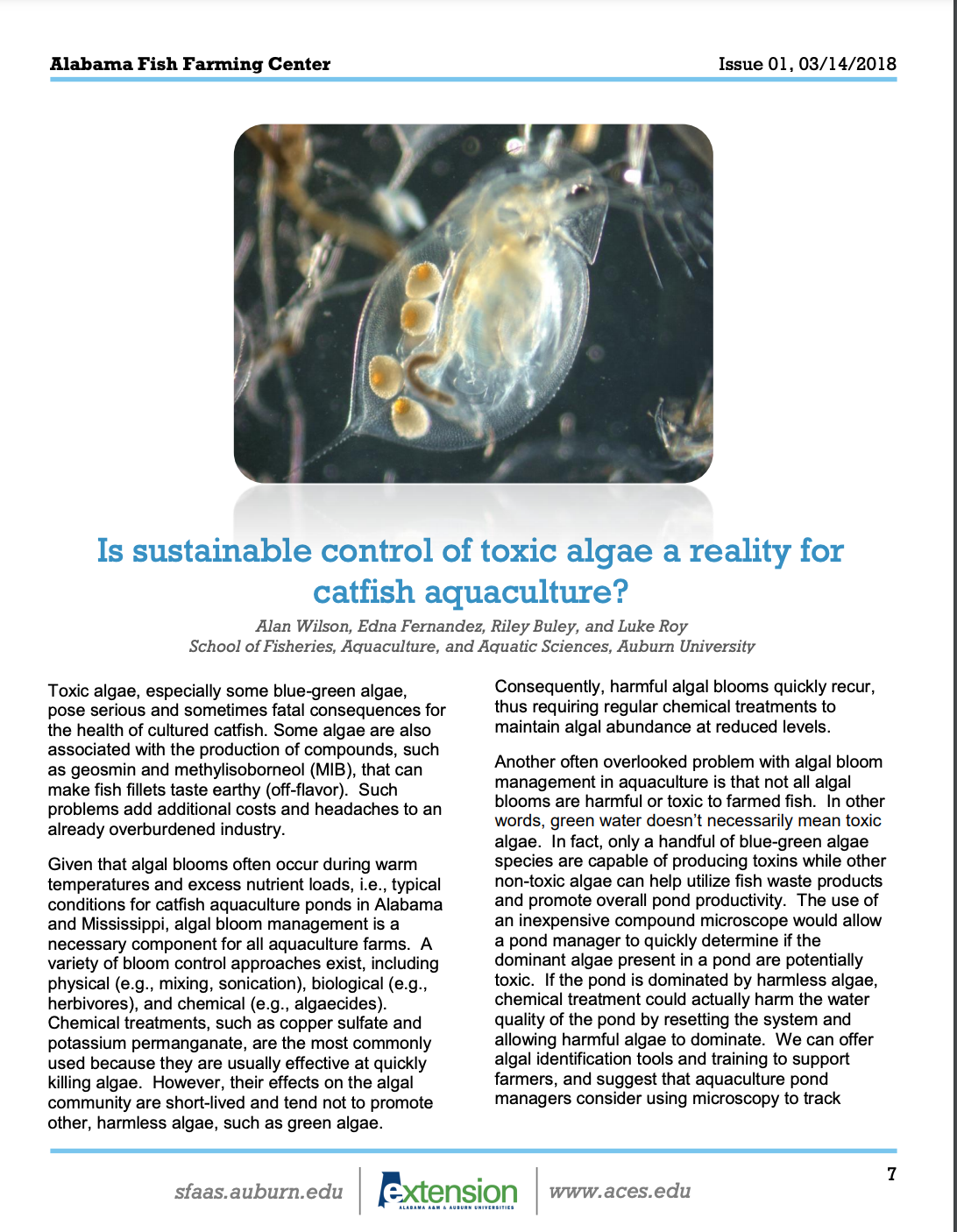
Wilson, A. E., E. G. Fernandez, R. Buley, and L. A. Roy. 2018. Is sustainable control of toxic algae a reality for catfish aquaculture? Fish Farming News 2018(1):7-8.
Toxic algae, especially some blue-green algae, pose serious and sometimes fatal consequences for the health of cultured catfish. Some algae are also associated with the production of compounds, such as geosmin and methylisoborneol (MIB), that can make fish fillets taste earthy (off-flavor). Such problems add additional costs and headaches to an already overburdened industry.
Given that algal blooms often occur during warm temperatures and excess nutrient loads, i.e., typical conditions for catfish aquaculture ponds in Alabama and Mississippi, algal bloom management is a necessary component for all aquaculture farms. A variety of bloom control approaches exist, including physical (e.g., mixing, sonication), biological (e.g., herbivores), and chemical (e.g., algaecides). Chemical treatments, such as copper sulfate and potassium permanganate, are the most commonly used because they are usually effective at quickly killing algae. However, their effects on the algal community are short-lived and tend not to promote other, harmless algae, such as green algae.
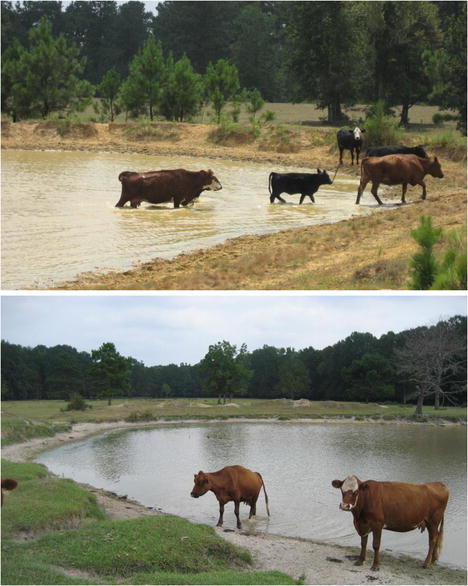
Wilson, A. E., M. F. Chislock, Z. Yang, M. U.G. Barros, and J. F. Roberts. 2018. Pond bank access as an approach for managing toxic cyanobacteria in beef cattle pasture drinking water ponds. Environmental Monitoring and Assessment 190:247.
Forty-one livestock drinking water ponds in Alabama beef cattle pastures during were surveyed during the late summer to generally understand water quality patterns in these important water resources. Since livestock drinking water ponds are prone to excess nutrients that typically lead to eutrophication, which can promote blooms of toxigenic phytoplankton such as cyanobacteria, we also assessed the threat of exposure to the hepatotoxin, microcystin. Eighty percent of the ponds studied contained measurable microcystin, while three of these ponds had concentrations above human drinking water thresholds set by the US Environmental Protection Agency (i.e., 0.3 μg/L). Water quality patterns in the livestock drinking water ponds contrasted sharply with patterns typically observed for temperate freshwater lakes and reservoirs. Namely, we found several non-linear relationships between phytoplankton abundance (measured as chlorophyll) and nutrients or total suspended solids. Livestock had direct access to all the study ponds. Consequently, the proportion of inorganic suspended solids (e.g., sediment) increased with higher concentrations of total suspended solids, which underlies these patterns. Unimodal relationships were also observed between microcystin and phytoplankton abundance or nutrients. Euglenoids were abundant in the four ponds with chlorophyll concentrations > 250 μg/L (and dominated three of these ponds), which could explain why ponds with high chlorophyll concentrations would have low microcystin concentrations. Based on observations made during sampling events and available water quality data, livestock-mediated bioturbation is causing elevated total suspended solids that lead to reduced phytoplankton abundance and microcystin despite high concentrations of nutrients, such as phosphorus and nitrogen. Thus, livestock could be used to manage algal blooms, including toxic secondary metabolites, in their drinking water ponds by allowing them to walk in the ponds to increase turbidity.
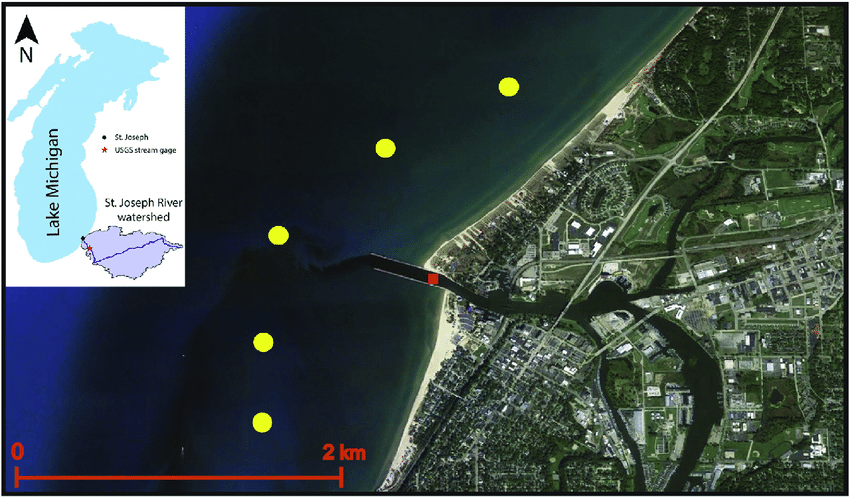
Jameel, Y., S. Stein, E. Grimm, C. Roswell, A. E. Wilson, C. Troy, T. Höök, and G. Bowen. 2018. Physicochemical characteristics of a southern Lake Michigan river plume. Journal of Great Lakes Research 44:209-218.
Riverine inputs are a major source of nutrients to the Laurentian Great Lakes and have important effects on nearshore biological processes, where mixing between river and lake water leads to formation of heterogeneous river plumes. We examined the physical and chemical characteristics of the St. Joseph River plume in southern Lake Michigan between May and October 2011, and in October 2012, June 2013 and April 2014. Specific electric conductivity and stable isotopes of water were used to quantify the fraction of river water (FRW) at sampling sites in Lake Michigan. Both tracers predicted similar patterns of FRW among sites; however, there was a systematic offset between the two methods, and specific electric conductivity method under-predicted the FRW by ∼5%. We observed a distinct, seasonally varying river plume, with plume size correlated with flow rate of St. Joseph River. Within the plume, sediments and nutrients were non-conservative and exhibited significant and seasonally varying losses that we attribute to settling of particle-bound nutrients and/or nutrients in particulate phase below the plume. The characteristics and the spatiotemporal heterogeneity of the river plume documented here may have important implications for the nearshore biogeochemistry of the Great Lakes and for understanding the roles of these features in ecological processes in nearshore areas.
Weaver, R. J., E. S. A. Santos, A. M. Tucker, A. E. Wilson, and G. E. Hill. 2018. Carotenoid metabolism strengthens the link between feather coloration and quality. Nature Communications 9:73. (Clarivate Analytics Web of Science Highly Cited Paper)
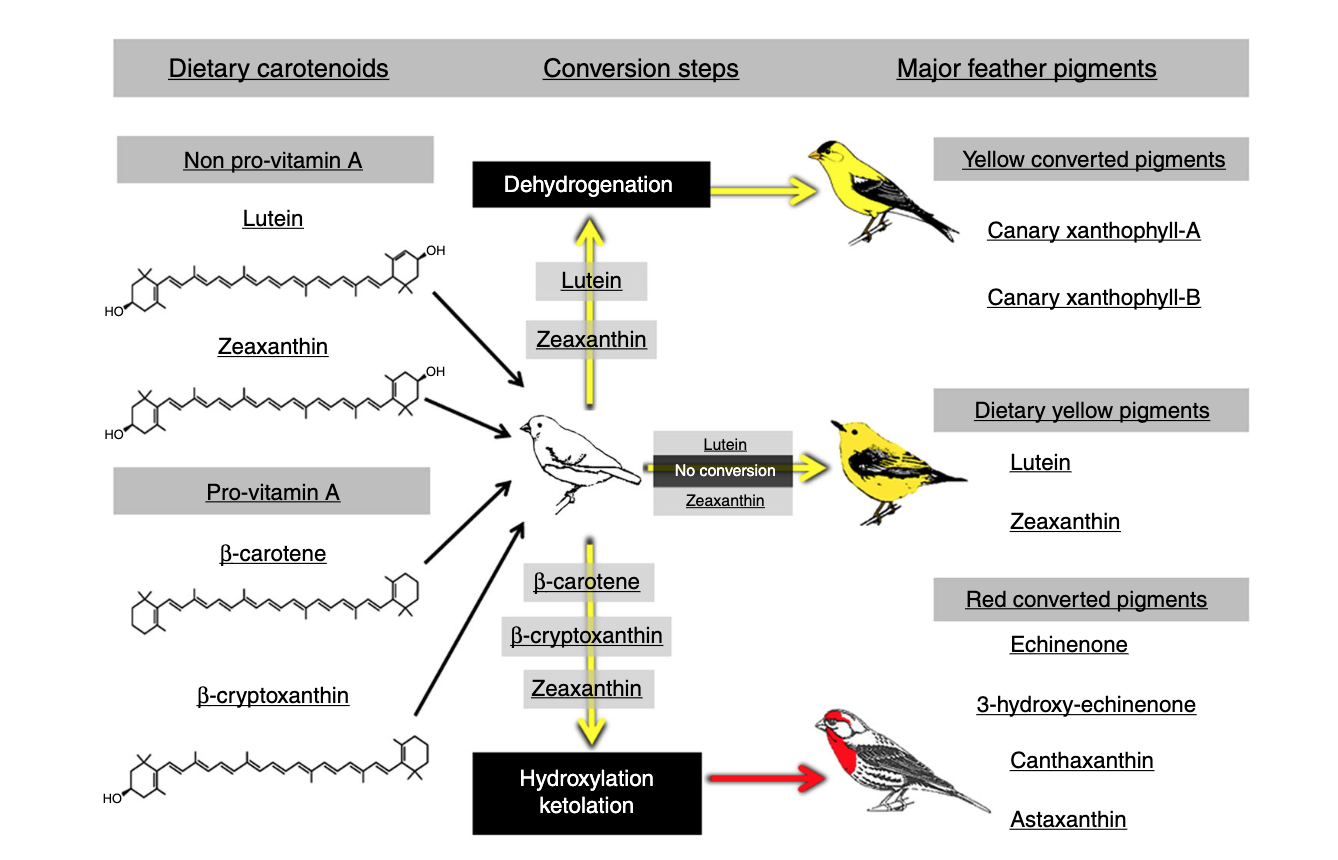
Thirty years of research has made carotenoid coloration a textbook example of an honest signal of individual quality, but tests of this idea are surprisingly inconsistent. Here, to investigate sources of this heterogeneity, we perform meta-analyses of published studies on the relationship between carotenoid-based feather coloration and measures of individual quality. To create color displays, animals use either carotenoids unchanged from dietary components or carotenoids that they biochemically convert before deposition. We hypothesize that converted carotenoids better reflect individual quality because of the physiological links between cellular function and carotenoid metabolism. We show that feather coloration is an honest signal of some, but not all, measures of quality. Where these relationships exist, we show that converted, but not dietary, carotenoid coloration drives the relationship. Our results have broad implications for understanding the evolutionary role of carotenoid coloration and the physiological mechanisms that maintain signal honesty of animal ornamental traits.
Lyu, K., L. Zhang, L. Gu, X. Zhu, A. E. Wilson, and Z. Yang. 2017. Cladoceran offspring tolerance to toxic Microcystis is promoted by maternal warming. Environmental Pollution 227:451-459.
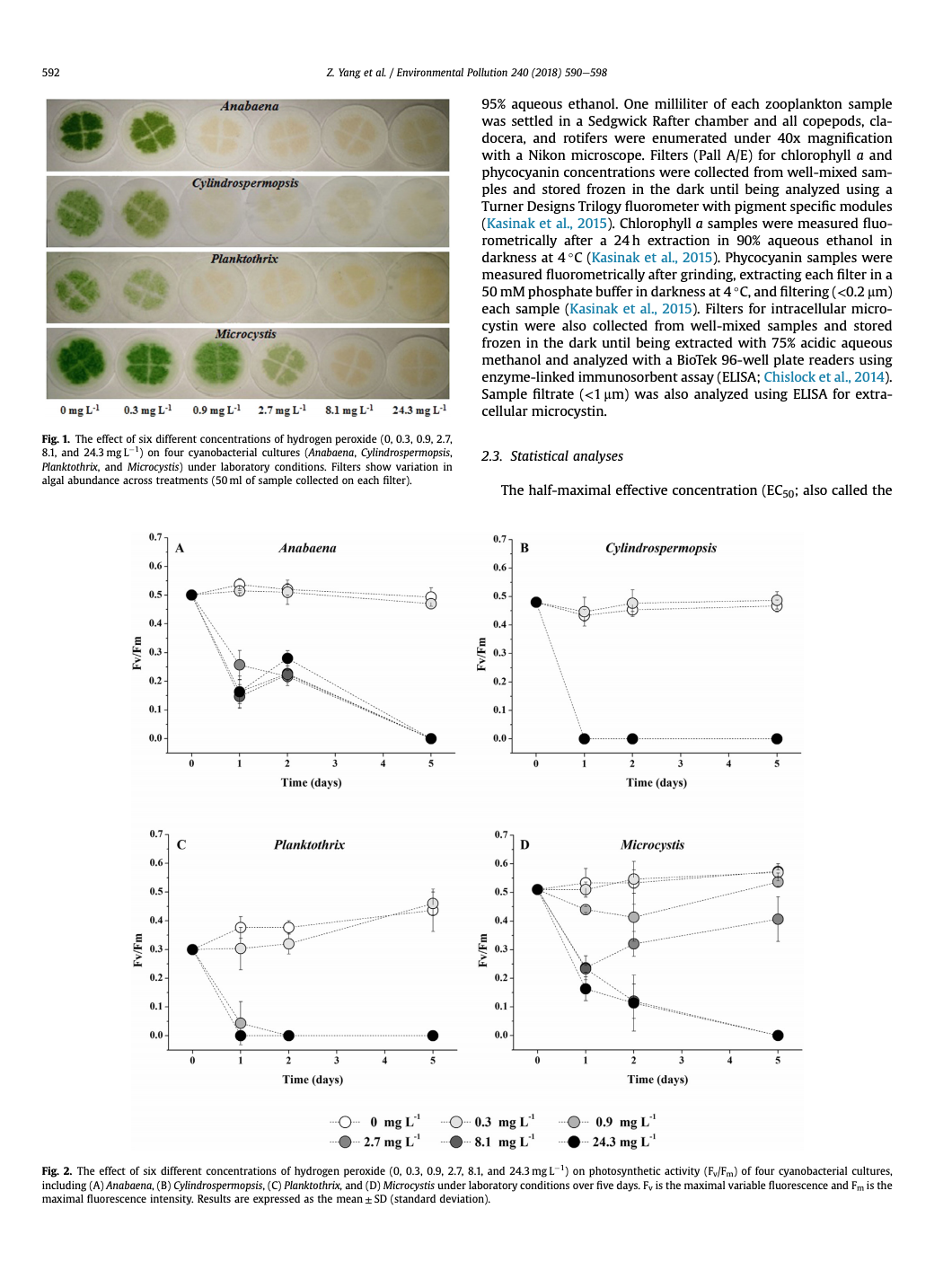
Elevated temperatures and nutrients can favor phytoplankton dominance by cyanobacteria, which can be toxic to zooplankton. There is growing awareness that maternal effects not only are common but can also significantly impact ecological interactions. Although climate change is broadly studied, relatively little is known regarding its influence on maternal effects in zooplankton. Given that lakes are sentinels for climate change and that elevated temperatures and nutrient pollution can favor phytoplankton dominance by toxic cyanobacteria, this study focused on elucidating the effects of maternal exposure to elevated temperatures on the tolerance of zooplankton offspring to toxic cyanobacteria in the diet. Three different maternal thermal environments were used to examine population fitness in the offspring of two cladoceran species that vary in size, including the larger Daphnia similoides and the smaller Moina macrocopa, directly challenged by toxic Microcystis. Daphnia and Moina mothers exposed to elevated temperatures produced offspring that were more resistant to Microcystis. Such findings may result from life-history optimization of mothers in different temperature environments. Interestingly, offspring from Moina fed with toxic Microcystis performed better than Daphnia offspring, which could partially explain the dominance of small cladocerans typically observed during cyanobacterial blooms. The present study emphasizes the importance of maternal effects on zooplankton resistance to cyanobacteria mediated through environmental warming and further highlights the complexities associated with the abiotic factors that influence zooplankton-cyanobacteria interactions.
Olsen, B. K., M. F. Chislock, A. Rebelein, and A. E. Wilson. 2017. Nutrient enrichment and vertical mixing mediate 2-methylisoborneol and geosmin concentrations in a drinking water reservoir. Water Science and Technology: Water Supply 17(2):500-507.
Few ecosystem-level studies have experimentally determined the physicochemical and biological factors that mediate concentrations of off-flavor compounds in drinking water reservoirs. Consequently, the watershed-scale mechanisms determining production of these compounds are still poorly understood. In a recent study, the addition of both nitrogen and phosphorus significantly increased 2-methylisoborneol (MIB). Not surprisingly, MIB was correlated with cyanobacterial abundance (a well-known producer of off-flavor compounds); however, MIB was most strongly correlated with diatom abundance. To empirically test for differences in the production of two important off-flavor compounds, specifically MIB and geosmin, by either cyanobacteria or diatoms, we conducted a fully factorial experiment that manipulated two factors that typically promote cyanobacteria (nitrogen and phosphorus fertilization) or diatoms (vertical mixing of the water column). As predicted, fertilization promoted cyanobacteria, and vertical mixing favored diatoms. Interestingly, the production of geosmin was rapid and consistent with an increase in cyanobacteria while MIB production increased later in the experiment when cyanobacterial biovolume tended to decline and diatom biovolume increased. Based on our current and previous studies, MIB and geosmin production is associated with cyanobacteria, but the direct or indirect influence of diatoms on production should not be ignored.
Kollock, R., K. Games, A. E. Wilson, and J. Sefton. 2016. Vehicle exposure and spinal musculature in military warfighters: a meta-analysis. Journal of Athletic Training 51(11):981-990.
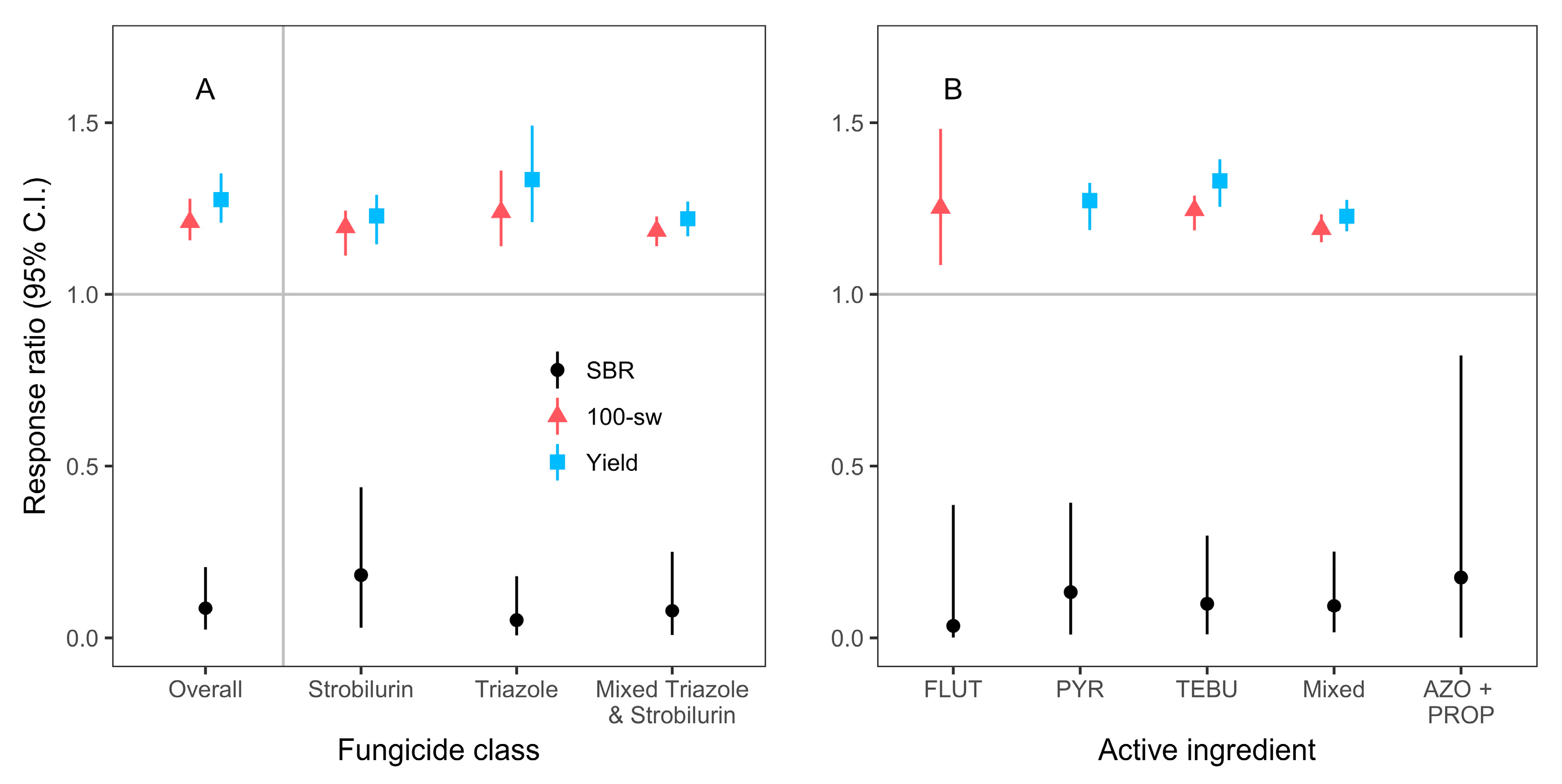
Context: Spinal musculature fatigue from vehicle exposure may place warfighters at risk for spinal injuries and pain. Research on the relationship between vehicle exposure and spinal musculature fatigue is conflicting. A better understanding of the effect of military duty on musculoskeletal function is needed before sports medicine teams can develop injury-prevention programs. Objective: To determine if the literature supports a definite effect of vehicle exposure on spinal musculature fatigue. Data sources: We searched the MEDLINE, Military & Government Collection (EBSCO), National Institute for Occupational Safety and Health Technical Information Center, PubMed, and Web of Science databases for articles published between January 1990 and September 2015. Study selection: To be included, a study required a clear sampling method, preexposure and postexposure assessments of fatigue, a defined objective measurement of fatigue, a defined exposure time, and a study goal of exposing participants to forces related to vehicle exposure. Data extraction: Sample size, mean preexposure and postexposure measures of fatigue, vehicle type, and exposure time. Data synthesis: Six studies met the inclusion criteria. We used the Scottish Intercollegiate Guidelines Network algorithm to determine the appropriate tool for quality appraisal of each article. Unweighted random-effects model meta-analyses were conducted, and a natural log response ratio was used as the effect metric. The overall meta-analysis demonstrated that vehicle exposure increased fatigue of the spinal musculature (P = .03; natural log response ratio = -0.22, 95% confidence interval = -0.42, -0.02). Using the spinal region as a moderator, we observed that vehicle ride exposure significantly increased fatigue at the lumbar musculature (P = .02; natural log response ratio = -0.27, 95% confidence interval = -0.50, -0.04) but not at the cervical or thoracic region. Conclusions: Vehicle exposure increased fatigue at the lumbar region.
Wilson, A. E. and Z. A. Osorio. 2016. DEB Numbers: Are aquatic ecologists underrepresented? DEBrief (NSF’s Division of Environmental Biology blog) 11 July 2016.
Generalizability has been fundamental to the major advances in environmental biology and is an important trait for current research ideas proposed to NSF. Despite its significance, a disconnect between terrestrial and aquatic ecological research has existed for several decades (Hairston 1990).
Wilson, A. E. and Z. A. Osorio. 2016. DEB Numbers: Are aquatic ecologists underrepresented? DEBrief (NSF’s Division of Environmental Biology blog) 11 July 2016.