Citation

Buley, R. P., Z. Yang, M. F. Gladfelter, and A. E. Wilson. 2019. Controlling blue-green algal blooms in aquaculture ponds using hydrogen peroxide. Fish Farming News 2019(1):3-5.

Abstract

Excessive blue-green algae (i.e., cyanobacteria) can harm aquatic organisms, including farmed fish. Although algal populations may be beneficial as they acquire excess nutrients, including potentially toxic forms such as nitrite and ammonia, and produce oxygen through photosynthesis, large algal blooms may lead to anoxia as decaying cells are decomposed by bacteria. In addition, some select strains of blue-green algae may produce chemicals that harm fish health (e.g., microcystins, nodularins) or cause fish filets to taste muddy (i.e., geosmin, 2- methylisoborneol). Both situations can cause significant economic losses to fish farmers around the world.

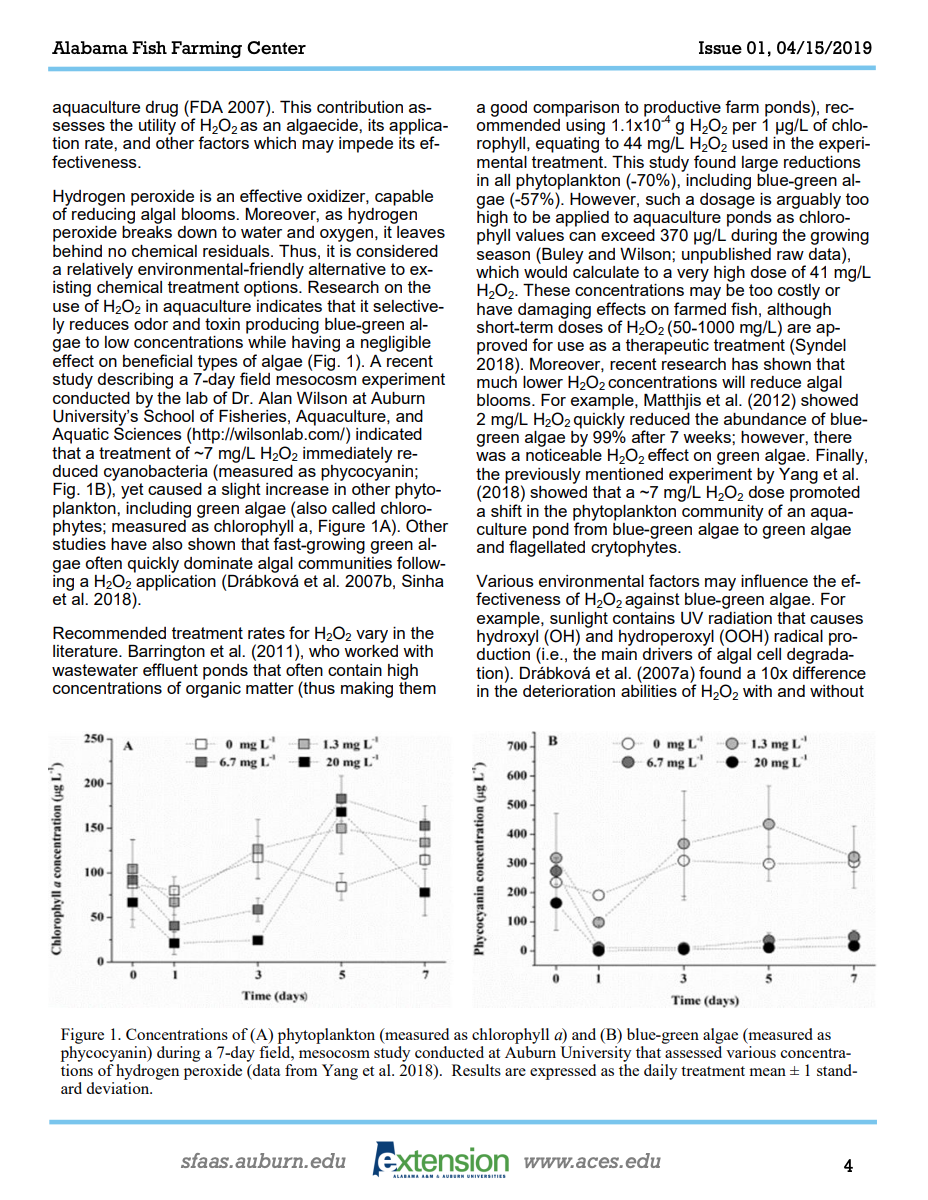
As our understanding of nuisance algal blooms continues to grow, so too do the means to combat these events. Developed methods can often be placed into the groupings of chemical, biological, and physical controls. Of these, chemical controls have been used to great effect; however, there is concern that some approved algaecides may persist in the environment for extended periods of time and, in certain situations, are too broad-spectrum in their toxicity to be practical. Consequently, alternative chemicals are actively being researched. And, although many algaecides exist, hydrogen peroxide (H2O2) has proved quite effective at reducing blue-green algae (Kay et al. 1982), and is currently an approved FDA

aquaculture drug (FDA 2007). This contribution assesses the utility of H2O2 as an algaecide, its application rate, and other factors which may impede its effectiveness.

Keywords

Dowload Publication (PDF)

Citation

Heine, K. B., A. Abebe, A. E. Wilson, and W. R. Hood. 2019. Copepod respiration increases by 7% per degree °C increase in temperature: a meta-analysis. Limnology and Oceanography Letters (4)3:53-61.

Abstract

Exponential increase in respiration rate with increasing temperature in poikilotherms is well documented, how-ever, the rate of change varies greatly across copepod taxa. Studies often report magnitude of change, but the rate of change in respiration across multiple temperatures is equivocal. We used 32 studies spanning 78 yrs of research and 50 copepod species (three orders) to quantify percent change in respiration rates per one-unit change in temperature. We found that copepod respiration rates increased by approximately 7% perC increase in water temperature across the orders Calanoida, Cyclopoida, and Harpacticoida. Neither food availability norscaling respiration to copepod dry weight affected the rate of change of respiration rates. Studies using Winkler titration to measure oxygen consumption produced significantly larger percent changes in respiration, whereas newer methods such as fiber optics produced smaller effects. These results have far reaching implications for understanding how copepod respiration responds to increasing water temperatures

Keywords

Link to Publication

Citation

Chalkowski, K., A. E. Wilson, C. A. Lepczyk, and S. Zohdy. 2019. Who let the cats out? a global meta-analysis on risk of parasitic infection in indoor versus outdoor domestic cats (Felis catus). Biology Letters 15:20180840. (see the complete Altmetric listNew York Times articleNewsweek articleMSN article)

Abstract

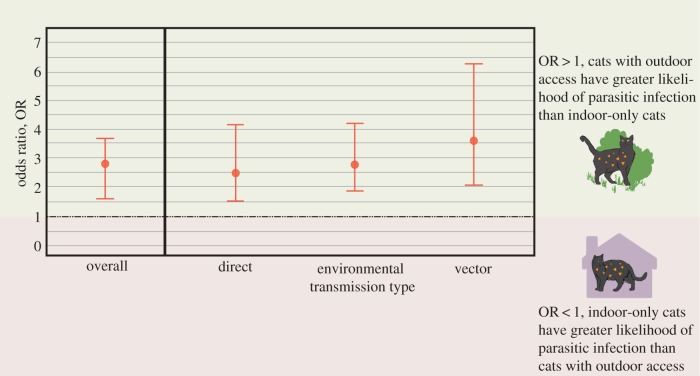
Parasitic infection risks in domestic animals may increase as a result of outdoor activities, often leading to transmission events to and from owners, other domestic animals and wildlife. Furthermore, outdoor access has not been quantified in domestic animals as a risk factor with respect to latitude or parasite transmission pathway. Cats are an ideal model to test parasitic infection risk in outdoor animals because there have been many studies analysing this risk factor in this species; and there is a useful dichotomy in cat ownership between indoor-only cats and those with outdoor access. Thus, we used meta-analysis to determine whether outdoor access is a significant risk factor for parasitic infection in domestic pet cats across 19 different pathogens including many relevant to human, domestic animal and wildlife health, such as Toxoplasma gondii and Toxocara cati. Cats with outdoor access were 2.77 times more likely to be infected with parasites than indoor-only cats. Furthermore, absolute latitude trended towards significance such that each degree increase in absolute latitude increased infection likelihood by 4%. Thus, restricting outdoor access can reduce the risk of parasitic infection in cats and reduce the risk of zoonotic parasite transmission, spillover to sympatric wildlife and negative impacts on feline health.

Keywords

Link to Publication

Citation

Bird, G., C. Kaczvinsky, A. E. Wilson, and N. B. Hardy. 2019. When do herbivorous insects compete? A phylogenetic meta-analysis. Ecology Letters 22:875-883.  (2019 College of Agriculture Outstanding Publication Award)

Abstract

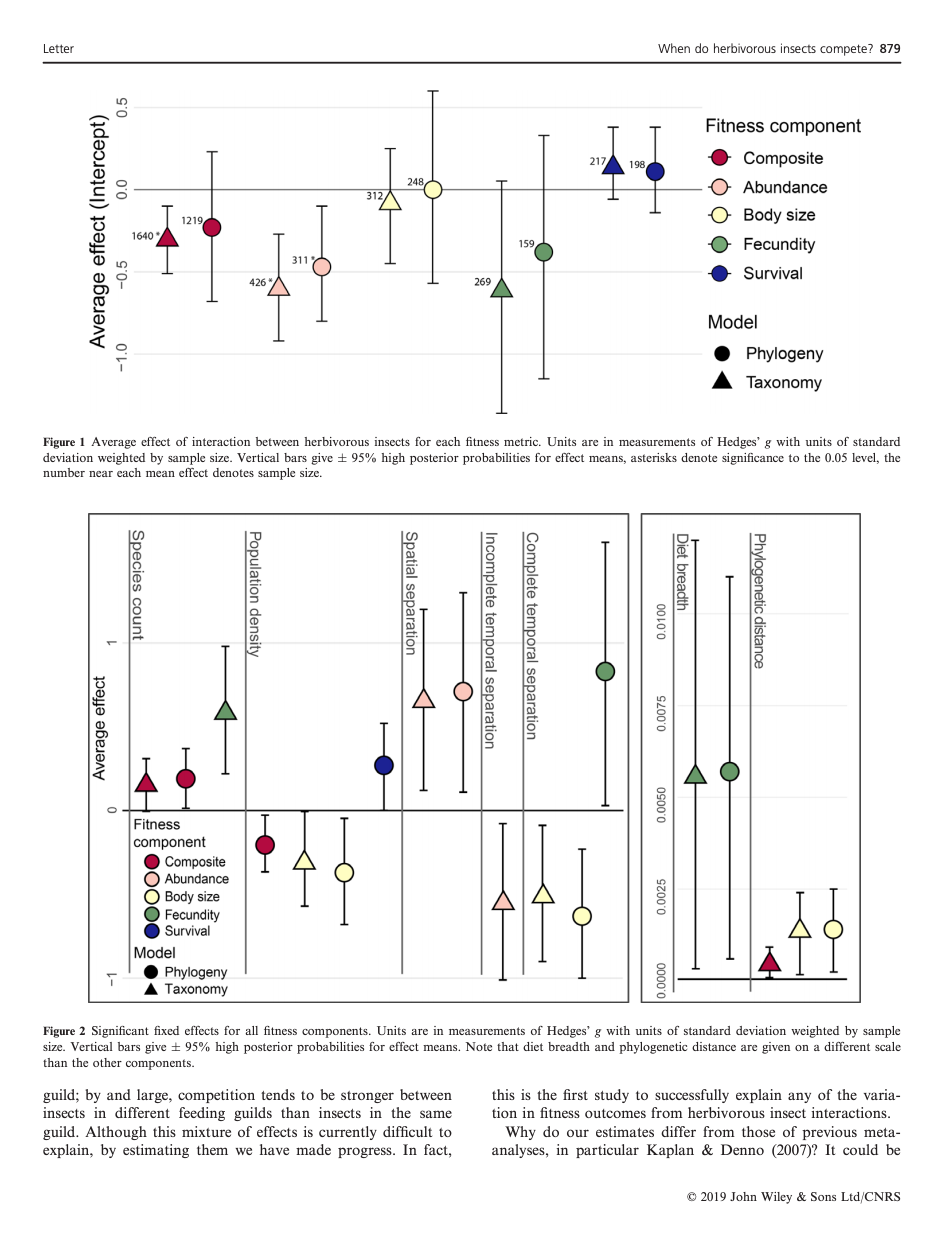
When herbivorous insects interact, they can increase or decrease each other’s fitness. As it stands, we know little of what causes this variation. Classic competition theory predicts that competition will increase with niche overlap and population density. And classic hypotheses of herbivorous insect diversification predict that diet specialists will be superior competitors to generalists. Here, we test these predictions using phylogenetic meta‐analysis. We estimate the effects of diet breadth, population density and proxies of niche overlap: phylogenetic relatedness, physical proximity and feeding‐guild membership. As predicted, we find that competition between herbivorous insects increases with population density as well as phylogenetic and physical proximity. Contrary to predictions, competition tends to be stronger between than within feeding guilds and affects specialists as much as generalists. This is the first statistical evidence that niche overlap increases competition between herbivorous insects. However, niche overlap is not everything; complex feeding guild effects indicate important indirect interactions.

Keywords

Link to Publication

Citation

Chislock, M. F., R. B. Kaul, K. A. Durham, O. Sarnelle, and A. E. Wilson. 2019. Eutrophication mediates rapid clonal evolution in Daphnia pulicariaFreshwater Biology 64:1275-1283.

Abstract

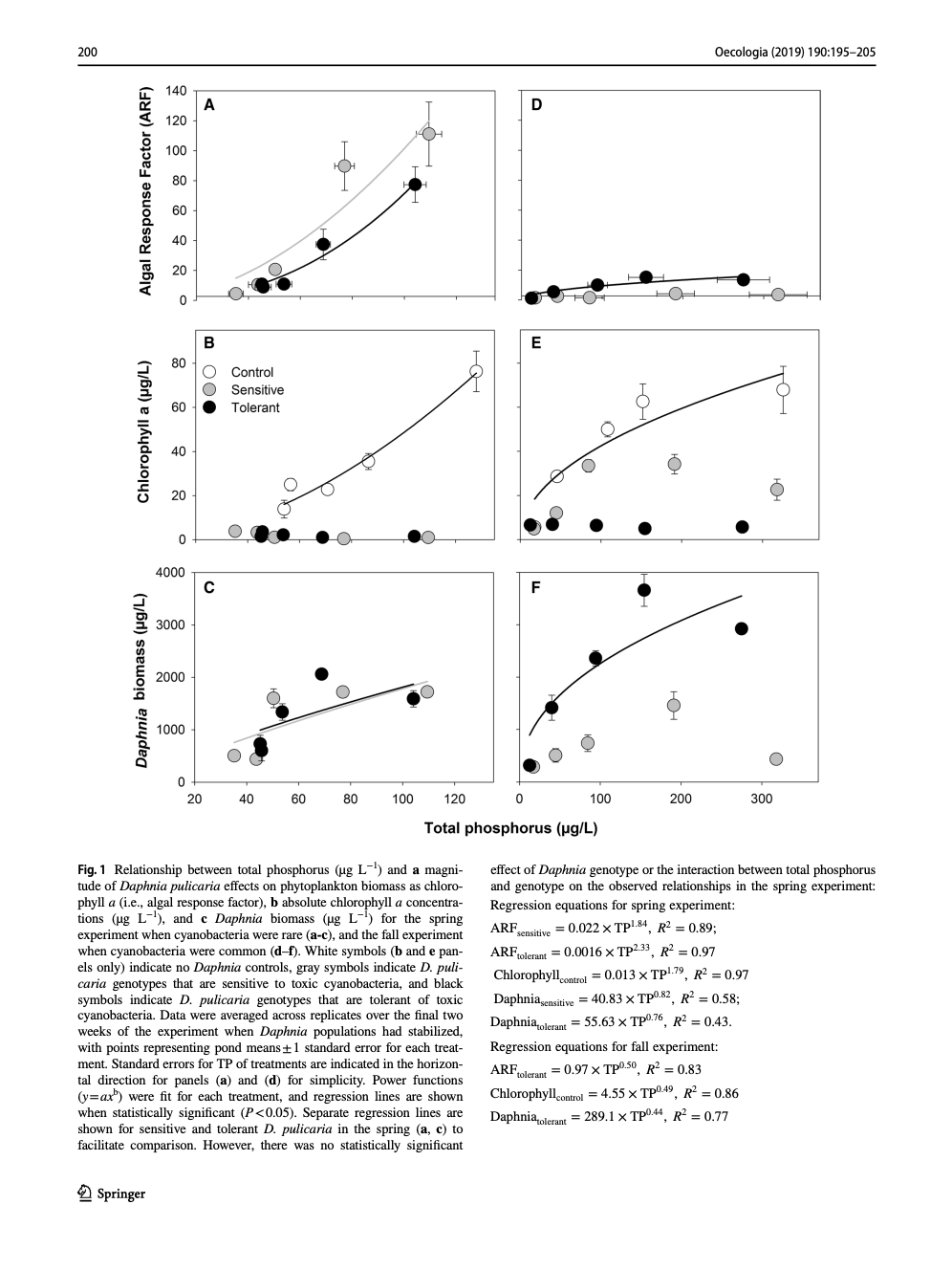
  1. Laboratory studies have revealed that Daphnia species can evolve to tolerate toxic cyanobacteria in the diet. Specifically, Daphnia from eutrophic lakes where cyanobacteria are common tend to have higher growth rates and survival when fed toxic cyanobacteria than populations from oligotrophic environments with low abundance of cyanobacteria.
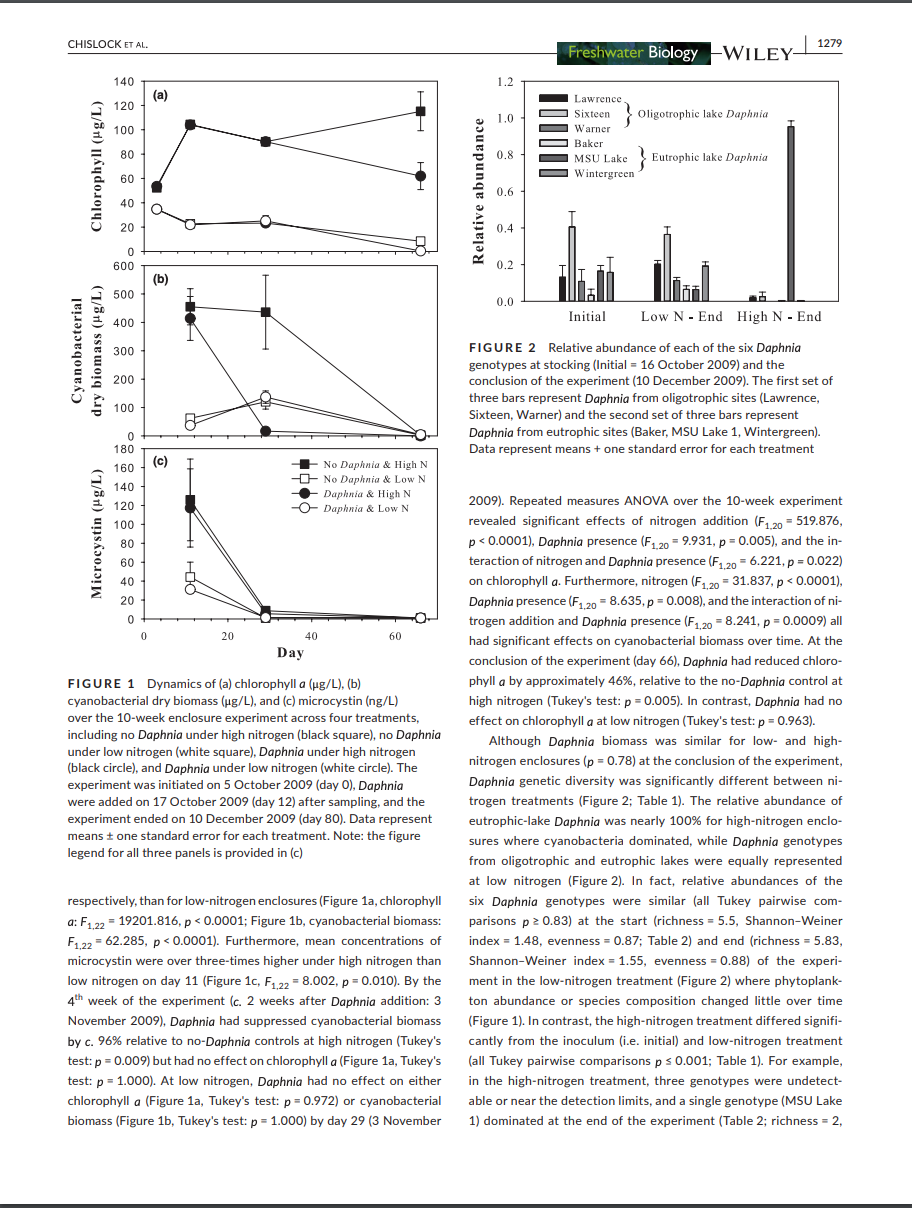
  2. We conducted an in‐lake mesocosm (i.e. limnocorral) experiment during the autumn of 2009 to assess the effects of nutrient enrichment on clonal evolution in Daphnia pulicaria. As nutrient enrichment often favours grazing‐resistant cyanobacteria, we hypothesised that fertilisation would influence the genotypic composition of D. pulicaria that vary in tolerance to cyanobacteria. Mesocosms were fertilised to manipulate phytoplankton and cyanobacterial abundance and concentrations of a cyanobacterial toxin (microcystin). Thus, half of the mesocosms were high‐nutrient and half were low‐nutrient. We then stocked half of the mesocosms with a mixture of six genetically‐distinct D. pulicaria genotypes (three genotypes from oligotrophic lakes and three from eutrophic lakes) leaving half of the mesocosms Daphnia‐free to assess grazing effects, using a fully factorial design.
  3. When compared to the low nutrient treatment, high nutrient mesocosms had nearly five‐fold higher chlorophyll a concentrations, eight‐fold higher cyanobacterial dry biomass, and three‐fold higher microcystin levels at the start of the experiment. In contrast, low nutrient mesocosms had phytoplankton concentrations typical of mesotrophic lakes.
  4. Fertilisation strongly affected Daphnia genetic diversity in the mesocosms. Final Daphnia genotype diversity in the mesocosms with low‐cyanobacteria (richness = 5.83, Shannon–Weiner index = 1.55, evenness = 0.88) was similar to the initial stocked diversity (richness = 5.50, Shannon–Weiner index = 1.48, evenness = 0.87). In contrast, final diversity in fertilised mesocosms with high cyanobacteria was greatly reduced (richness = 2, Shannon–Weiner index = 0.17), with one Daphnia genotype that originated from the most‐eutrophic lake being highly dominant (evenness = 0.25). Thus, eutrophication mediated strong clonal selection of a cyanobacteria‐tolerant Daphnia genotype over just 10 weeks.
  5. By the end of the experiment, Daphnia significantly reduced phytoplankton biomass in the high‐nutrient, but not in the low‐nutrient treatment. This difference in effect size was largely driven by the five‐fold higher initial phytoplankton biomass in the high‐nutrient treatment. Thus, the ability of Daphnia to reduce phytoplankton biomass in eutrophic lakes may be driven more so by the abundance of planktivorous fishes, as opposed to the prevalence of cyanobacteria and their associated toxins.

Keywords

Link to Publication

Citation

Wadsworth, P., A. E. Wilson, and W. C. Walton. 2019. A meta-analysis of growth rate in diploid and triploid oysters. Aquaculture 499:9-16.

Abstract

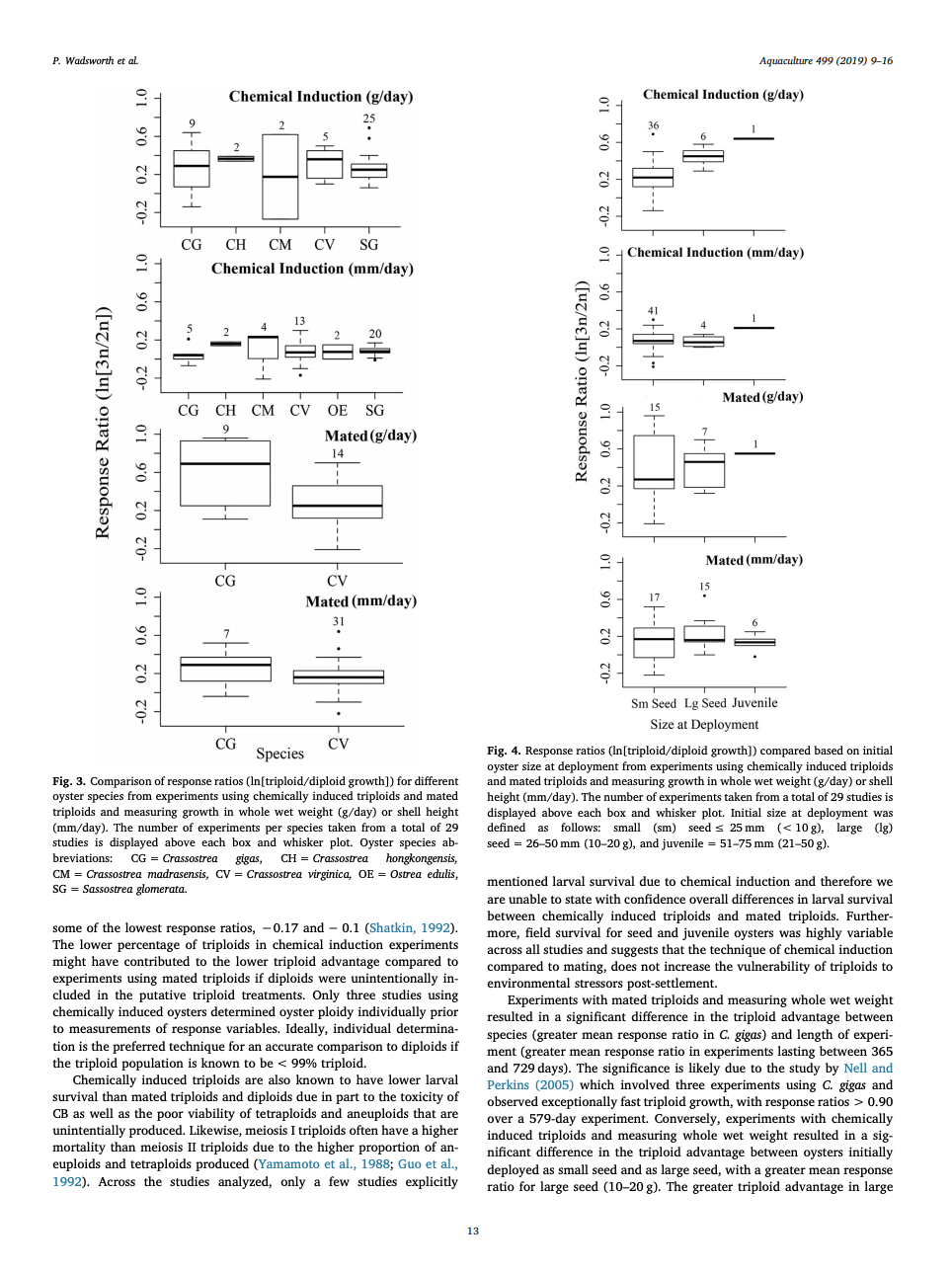
Around 34 years ago, the first reports on the performance of triploid oysters were published. Since then, triploid oysters have offered many benefits to the oyster industry, such as faster growth, improved meat quality, partial sterility, and increased survival due to disease resistance. However, the extent of a triploid growth advantage, in particular, can vary across studies, measurement parameters, environmental conditions and husbandry practices. To quantitatively compare diploid and triploid oyster growth rates, a meta-analysis was performed with 29 published studies using triploid oysters produced by chemical induction or by crossing diploid and tetraploid oysters (i.e., “mated triploids”). The difference in growth rate between ploidy was evaluated using natural log transformed response ratios (ln[3n/2n]) in a random-effects model weighted by sample size. The positive response ratios in 126 of the 148 independent experiments showed a significant growth advantage of the triploid over the diploid. On average, mated triploids grew 20% faster than diploids in shell height and 49% faster in whole wet weight. While chemically induced triploids had marginally less growth advantage than mated triploids, growing on average 8% faster than diploids in shell height and 31% faster in whole wet weight. Response ratios for experiments using mated triploids and measuring whole wet weight was significantly affected by species and length of study, while response ratios for experiments using chemically induced triploids and measuring whole wet weight was significantly affected by initial size at deployment. Conversely, response ratios for experiments using mated triploids or chemically induced triploids and measuring shell height were not affected by any tested moderator. The lack of a triploid growth advantage in 15% of the experiments (22/148) could have been influenced by a variety of factors including intraspecific variation, differences in sampling, husbandry practices, and environmental conditions.

Keywords

Link to Publication

Citation

Wilson, A. E., J. L. Pollock, I. Billick, C. Domingo, E. G. Fernandez-Figueroa, E. Nagy, T. D. Steury, and A. Summers. 2018. Assessing science training programs: Structured undergraduate research programs make a difference. BioScience 68(7):529-534. (Editor’s Choice) (2018 College of Agriculture High Impact Paper of the Year Award)

Abstract

Training in science, technology, engineering, and mathematics (STEM) is a top priority for driving economic growth and maintaining technological competitiveness. We propose that exposure to a rigorous research program as an undergraduate leads to success in a research STEM career. We compared the scientific outcomes of 88 participants from five National Science Foundation Research Experiences for Undergraduates (REU) Site programs with demographically similar applicants to assess the impact that formal, organized, and funded undergraduate summer research experiences have on participants. Our study demonstrates that REU participants are more likely to pursue a PhD program and generate significantly more valued products, including presentations, publications, and awards, when compared with applicants. We believe that key components of the program include funding for personal and professional needs; access to diverse intellectual, analytical, and field resources; and the presence of other undergraduate researchers who support each other and share their goals and interests.

Keywords

Link to Publication

Citation

Delaney, M., A. ArchMiller, D. P. Delaney, A. E. Wilson, and E. J. Sikora. 2018. Effectiveness of fungicide on soybean rust in the southeastern United States: a meta-analysis. Sustainability 10:1784.

Abstract

Soybean rust (SBR), caused by the fungus Phakopsora pachyrhizi Sydow, has been of concern to soybean (Glycine max Merrill) growers in the southern United States since its introduction in 2004. As this fungus develops, pustules become numerous on the underside of leaves, which then turn yellow and drop prematurely, resulting in fewer pods, and poorly developed seeds. Our objective was to evaluate the efficacy of fungicide use in controlling SBR by conducting a meta-analysis of 61 published and unpublished trials across the southern United States from 2004 to 2014. We analyzed fungicide efficacy based on factors such as specific classes of fungicide, active ingredients, number of fungicide applications, target growth stage upon initial application, level of disease pressure, and year of the study. Fungicides significantly increased yield and 100-seed weight and decreased the severity of SBR. The means of SBR severity, yield, and 100-seed weight in fungicide-treated plants were 9% (95% confidence interval: 2%, 21%), 128% (121%, 135%), and 121% (116%, 128%), respectively, of those calculated in the control plants. By using meta-analysis to analyze fungicide efficacy across multiple field trials, we were able to determine that one application of a strobilurin fungicide when plants were either beginning pod development (R3) or developing seeds (R5) was the most cost-effective approach to controlling SBR and increasing 100-seed weight.

Keywords

Link to Publication

Citation

Baker, B. C., A. E. Wilson, and J. T. Scott. 2018. Phytoplankton N2 fixation efficiency and its effect on harmful algal blooms. Freshwater Science 37(2):264-275.

Abstract

Toxin production during harmful algal blooms (HABs) depends on N availability. However, the role of N2 fixation as a mechanism to fuel ‘new’ N into HABs and increase their toxicity has not been well studied. We quantified the effects of N∶P supply ratios on N2-fixation efficiency in HABs from 3 warm-temperate man-made reservoirs. We enriched mesocosms with the same concentration of P (112 µg P/L) but differing amounts of N (50‒2500 µg N/L) labeled with a 15N tracer to simulate HABs growing along a large molar N∶P gradient (1‒50). N2 fixation increased significantly at low N∶P but generally did not alleviate N limitation and lead to accumulating N and phytoplankton biomass efficiently unless the magnitude of stoichiometric imbalance was low. Furthermore, microcystin concentrations >1.0 µg/L occurred only in mesocosms receiving N∶P = 50 supply and only in the reservoir with detectable concentrations of microcystin at the beginning of the experiment. These results suggest that HABs in P-rich reservoirs may yield significantly more biomass and potentially become more toxic when reactive N is plentiful in the water column relative to P. Thus, reducing N concentrations can be useful as a supplement to the primary P reduction strategies used to minimize the harmful effects of algal blooms.

Keywords

Link to Publication

Citation

Yang, Z., R. P. BuleyE. G. Fernandez-FigueroaM. U.G. BarrosS. Rajendran, and A. E. Wilson. 2018. Hydrogen peroxide treatment promotes chlorophytes over toxic cyanobacteria in a hyper-eutrophic aquaculture pond. Environmental Pollution 240:590-598. 

Abstract

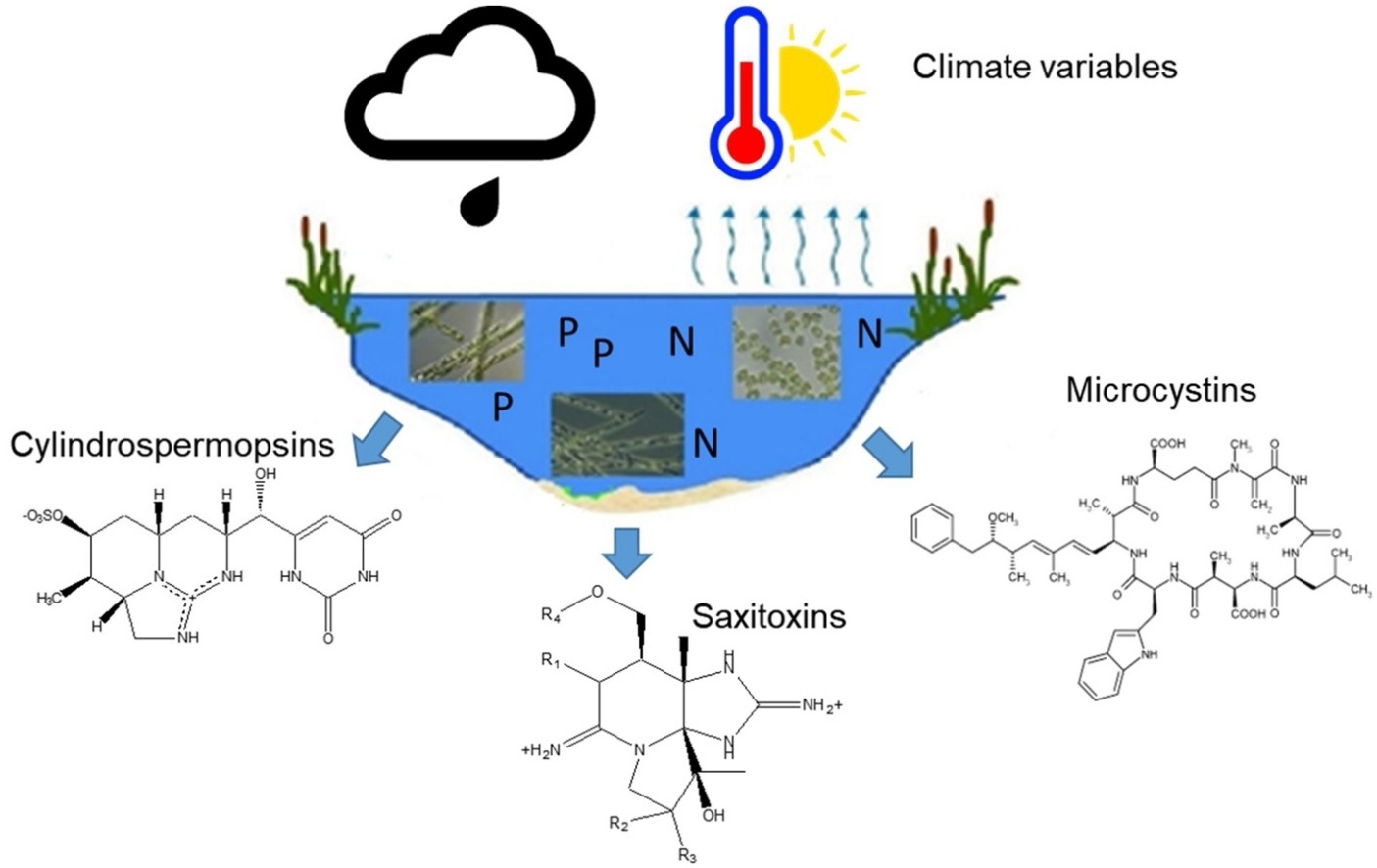
Controlling blooms of toxigenic phytoplankton, including cyanobacteria, is a high priority for managers of aquatic systems that are used for drinking water, recreation, and aquaculture production. Although a variety of treatment approaches exist, hydrogen peroxide (H2O2) has the potential to be an effective and ecofriendly algaecide given that this compound may select against cyanobacteria while not producing harmful residues. To broadly evaluate the effectiveness of H2O2 on toxigenic phytoplankton, we tested multiple concentrations of H2O2 on (1) four cyanobacterial cultures, including filamentous Anabaena, Cylindrospermopsis, and Planktothrix, and unicellular Microcystis, in a 5-day laboratory experiment and (2) a dense cyanobacterial bloom in a 7-day field experiment conducted in a nutrient-rich aquaculture pond. In the laboratory experiment, half-maximal effective concentrations (EC50) were similar for Anabaena, Cylindrospermopsis, and Planktothrix (average EC50 = 0.41 mg L-1) but were ∼10x lower than observed for Microcystis (EC50 = 5.06 mg L-1). Results from a field experiment in an aquaculture pond showed that ≥1.3 and ≥ 6.7 mg L-1 of H2O2 effectively eliminated Planktothrix and Microcystis, respectively. Moreover, 6.7 mg L-1 of H2O2 reduced microcystin and enhanced phytoplankton diversity, while causing relatively small negative effects on zooplankton abundance. In contrast, 20 mg L-1 of H2O2 showed the greatest negative effect on zooplankton. Our results demonstrate that H2O2 can be an effective, rapid algaecide for controlling toxigenic cyanobacteria when properly dosed.

Keywords

Link to Publication