Citation

Thurlow, C. M., M. A. Williams, A. Carrias, C. Ran, M. Newman, J. Tweedie, E. Allison, L. N. Jescovitch, A. E. Wilson, J. S. Terhune, and M. R. Liles. 2019. Bacillus velezensis AP193 exerts probiotic effects in channel catfish (Ictalurus punctatus) and reduces aquaculture pond eutrophication. Aquaculture 503:347-356.

Abstract

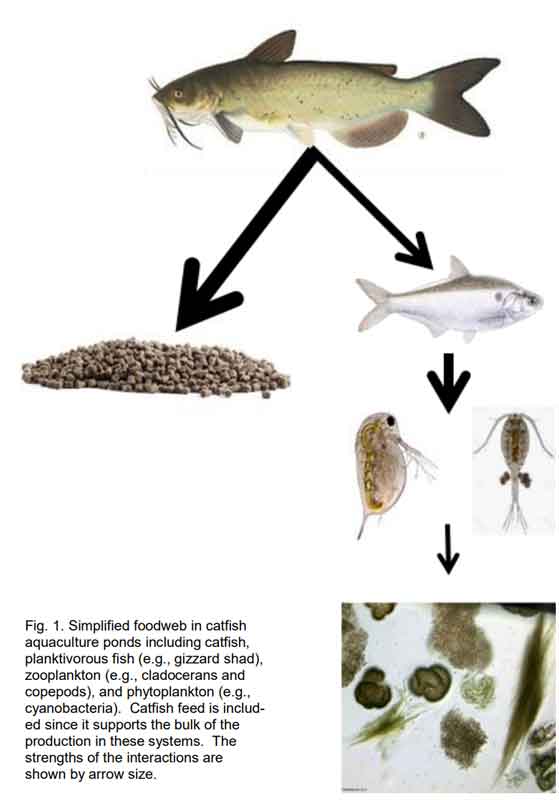
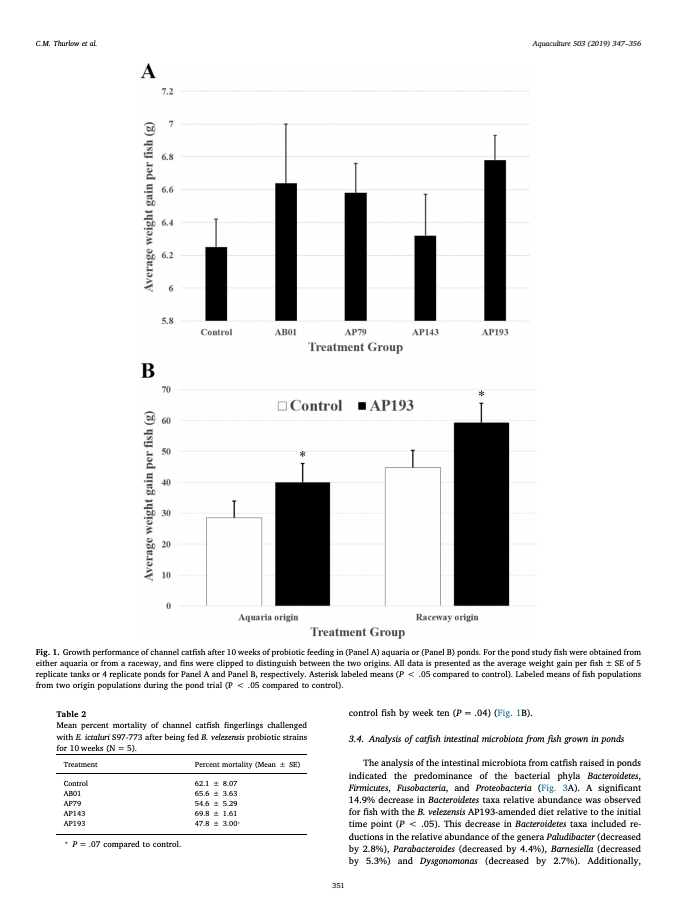
Ictalurus punctatus (channel catfish) is an economically important farmed fish particularly in the southeastern United States. Aquaculture sustainability is threatened by disease pressure and the eutrophic conditions resulted from intensive fish farming. Previous research identified Bacillus velezensis strains that reduced mortality due to bacterial pathogens when used as a feed amendment. This study was conducted to determine the effects of B. velezensis-amended feed on catfish growth performance, pond water quality, and on the microbiomes in fish intestines and pond water. B. velezensis AP193 was evaluated in a ten-week pond trial, with four replicate ponds per probiotic treatment or control group. Feed amended with B. velezensis AP193 induced a 40.4% or 32.6% increase in growth relative to control feed in fingerling catfish that originated from aquaria or raceways, respectively. No significant differences were observed in the catfish intestinal microbiota or the pond microbiota due to probiotic-amended feed. The water quality was improved in ponds in which fish were fed with the probiotic-amended feed, as significant reductions were found in total phosphorus (19%), total nitrogen (43%) and nitrate (75%). These data suggest that B. velezensis AP193 can promote catfish growth and improve pond water quality when used as a feed amendment.

Keywords

Link to Publication

Citation

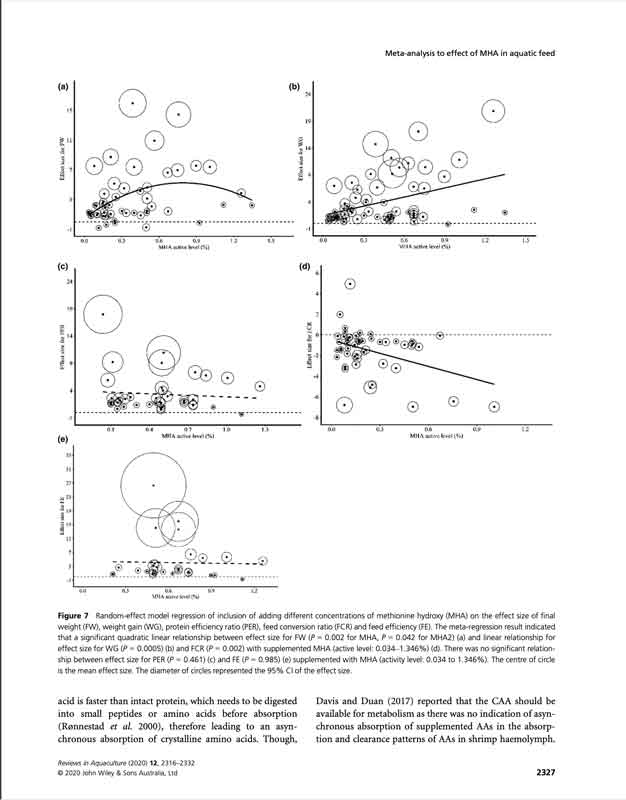
Galkanda-Arachchige, H., A. E. Wilson, and D. A. Davis. 2020. Success of fishmeal replacement through poultry by-product meal in aquaculture feed formulations: a meta-analysis. Reviews in Aquaculture 12(3):1624-1636.  (Clarivate Analytics Web of Science Highly Cited Paper)

Abstract

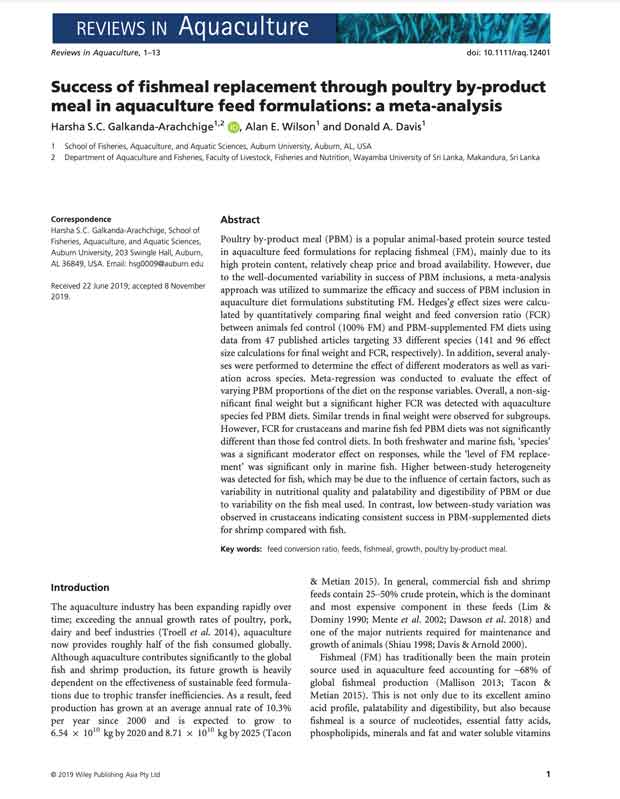
Poultry by-product meal (PBM) is a popular animal-based protein source tested in aquaculture feed formulations for replacing fishmeal (FM), mainly due to its high protein content, relatively cheap price and broad availability. However, due to the well-documented variability in success of PBM inclusions, a meta-analysis approach was utilized to summarize the efficacy and success of PBM inclusion in aquaculture diet formulations substituting FM. Hedges’g effect sizes were calculated by quantitatively comparing final weight and feed conversion ratio (FCR) between animals fed control (100% FM) and PBM-supplemented FM diets using data from 47 published articles targeting 33 different species (141 and 96 effect size calculations for final weight and FCR, respectively). In addition, several analyses were performed to determine the effect of different moderators as well as variation across species. Meta-regression was conducted to evaluate the effect of varying PBM proportions of the diet on the response variables. Overall, a non-significant final weight but a significant higher FCR was detected with aquaculture species fed PBM diets. Similar trends in final weight were observed for subgroups. However, FCR for crustaceans and marine fish fed PBM diets was not significantly different than those fed control diets. In both freshwater and marine fish, ‘species’ was a significant moderator effect on responses, while the ‘level of FM replacement’ was significant only in marine fish. Higher between-study heterogeneity was detected for fish, which may be due to the influence of certain factors, such as variability in nutritional quality and palatability and digestibility of PBM or due to variability on the fish meal used. In contrast, low between-study variation was observed in crustaceans indicating consistent success in PBM-supplemented diets for shrimp compared with fish.

Keywords

Link to Publication

Citation

Ayipio, E., D. Wells, A. McQuilling, and A. E. Wilson. 2019. Comparisons between aquaponics and conventional hydroponic crop yield: a meta-analysis. Sustainability 11:6511. 

Abstract

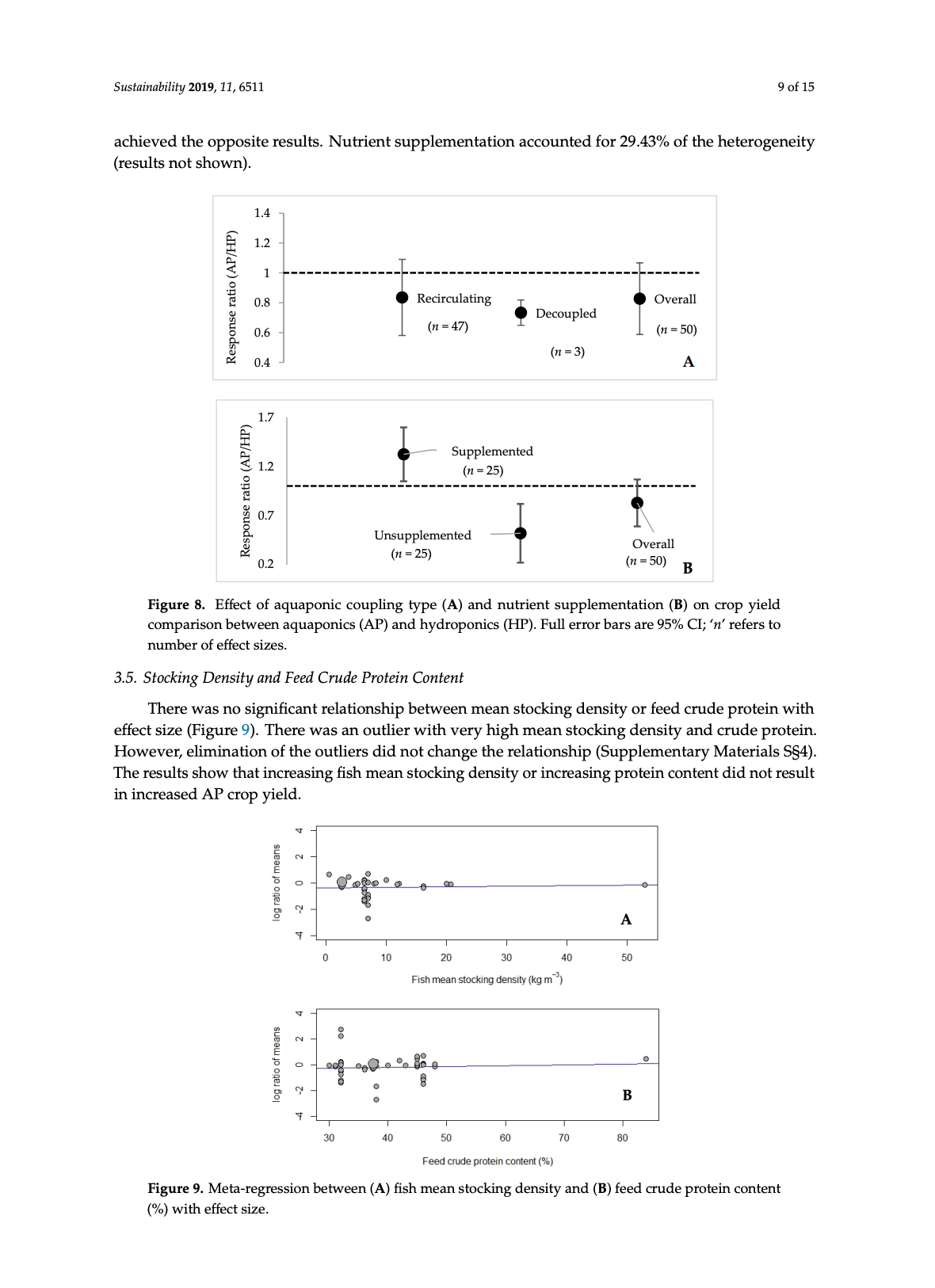
Aquaponic is a relatively new system of farming, which has received much research attention due to its potential for sustainability. However, there is no consensus on comparability between crop yields obtained from aquaponics (AP) and conventional hydroponics (cHP). Meta-analysis was used to synthesize the literature on studies that compared crop yields of AP and cHP. Factors responsible for differences were also examined through subgroup analysis. A literature search was conducted in five databases with no time restriction in order to capture any publication on AP and cHP crop yield comparisons. The search was, however, limited to journal and conference articles published in English. Study characteristics and outcome measures of food crops were extracted. A natural log response ratio effect size measure was used to transform study outcomes. An unweighted meta-analysis was conducted through bootstrapping to calculate overall effect size and its confidence interval. Between-study heterogeneity (I 2 ) was estimated using a random effects model. Subgroup and meta-regression were used to assess moderators, in an attempt to explain heterogeneity in the effect size. The results showed that although crop yield in AP was lower than conventional cHP, the difference was not statistically significant. However, drawing conclusions on the overall effect size must be done with caution due to the use of unweighted meta-analysis. There were statistically significant effects of aquatic organism, hydroponic system type, and nutrient supplementation used in the studies on crop yield comparisons. Nutrient supplementation, particularly, led to on average higher crop yield in AP relative to cHP. These findings are a vital information source for choosing factors to include in an AP study. These findings also synthesize the current trends in AP crop yields in comparison with cHP.

Keywords

Link to Publication

Citation

Cook, K. V., C. Li, H. Cai, L. Krumholz, K. D. Hambright, H. W. Paerl, M. Steffen, A. E. Wilson, M. Burford, H.-P. Grossart, D. Hamilton, H.-L. Jiang, A. Sukenik, D. Latour, E. Meyer, J. Padisak, B. Qin, R. Zamor, and G. Zhu. 2020. The global Microcystis interactome. Limnology and Oceanography 65:S194-S207. 

Abstract

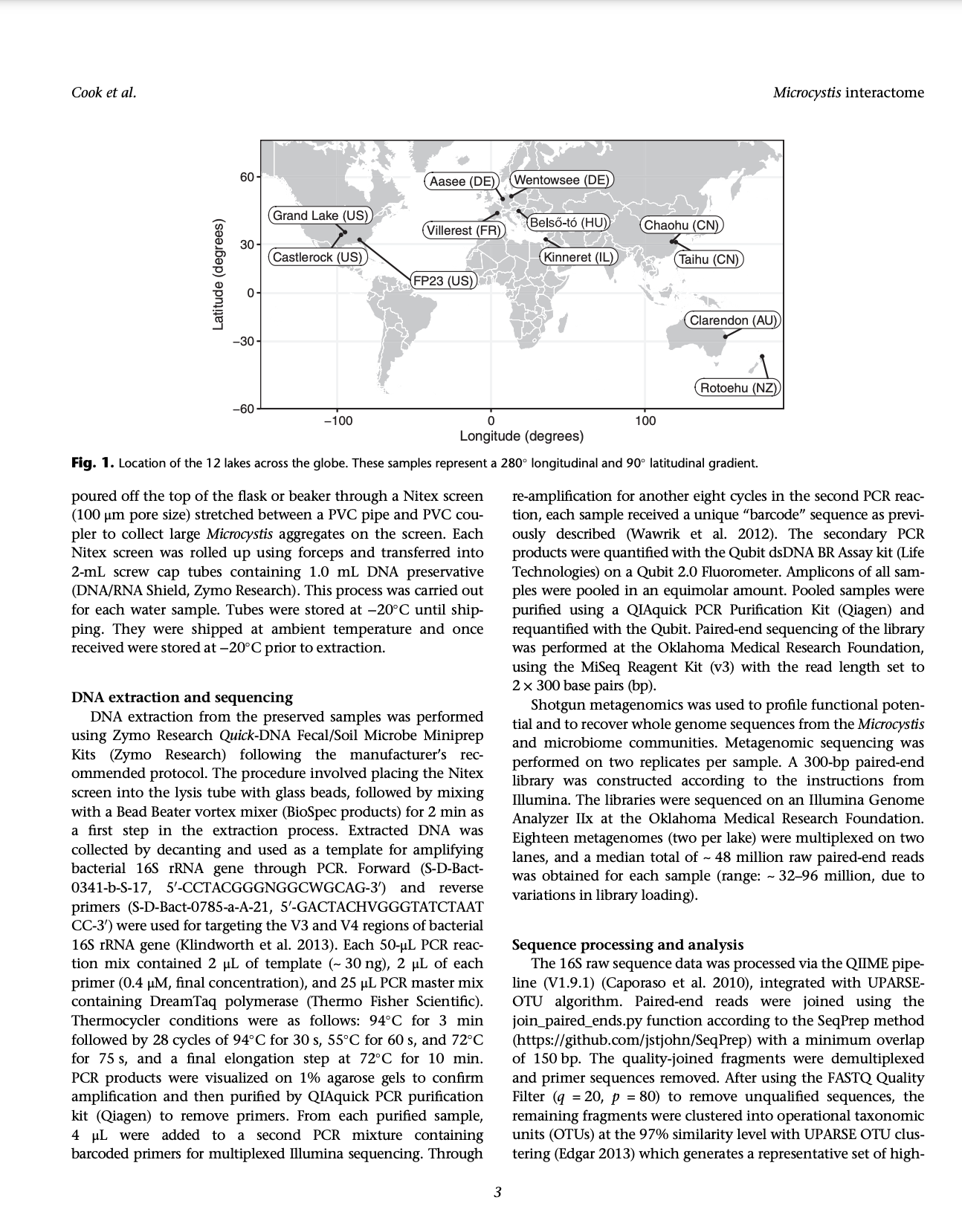
Bacteria play key roles in the function and diversity of aquatic systems, but aside from study of specific bloom systems, little is known about the diversity or biogeography of bacteria associated with harmful cyanobacterial blooms (cyanoHABs). CyanoHAB species are known to shape bacterial community composition and to rely on functions provided by the associated bacteria, leading to the hypothesized cyanoHAB interactome, a coevolved community of synergistic and interacting bacteria species, each necessary for the success of the others. Here, we surveyed the microbiome associated with Microcystis aeruginosa during blooms in 12 lakes spanning four continents as an initial test of the hypothesized Microcystis interactome. We predicted that microbiome composition and functional potential would be similar across blooms globally. Our results, as revealed by 16S rRNA sequence similarity, indicate that M. aeruginosa is cosmopolitan in lakes across a 280° longitudinal and 90° latitudinal gradient. The microbiome communities were represented by a wide range of operational taxonomic units and relative abundances. Highly abundant taxa were more related and shared across most sites and did not vary with geographic distance, thus, like Microcystis, revealing no evidence for dispersal limitation. High phylogenetic relatedness, both within and across lakes, indicates that microbiome bacteria with similar functional potential were associated with all blooms. While Microcystis and the microbiome bacteria shared many genes, whole-community metagenomic analysis revealed a suite of biochemical pathways that could be considered complementary. Our results demonstrate a high degree of similarity across global Microcystis blooms, thereby providing initial support for the hypothesized Microcystis interactome.

Keywords

Link to Publication

Citation

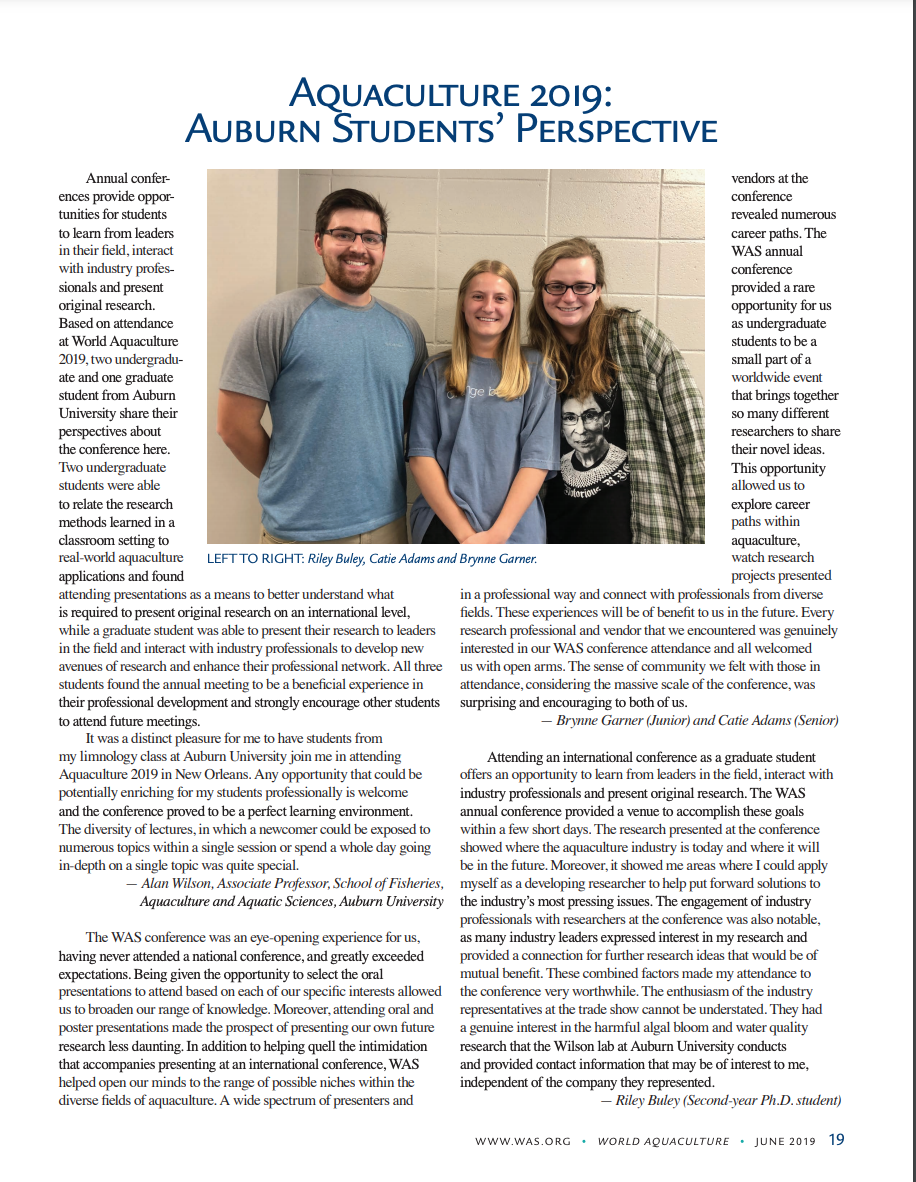
Garner, B., C. Adams, R. Buley, and A. E. Wilson. 2019. Aquaculture 2019: Auburn students’ perspective. World Aquaculture 50(2):19 

Abstract

Annual conferences provide opportunities for students to learn from leaders in their field, interact with industry professionals and present original research. Based on attendance at World Aquaculture 2019, two undergraduate and one graduate student from Auburn University share their perspectives about the conference here. Two undergraduate students were able to relate the research methods learned in a classroom setting to real-world aquaculture applications and found attending presentations as a means to better understand what is required to present original research on an international level, while a graduate student was able to present their research to leaders in the field and interact with industry professionals to develop new avenues of research and enhance their professional network. All three students found the annual meeting to be a beneficial experience in their professional development and strongly encourage other students to attend future meetings.

Dowload Publication (PDF)

Citation

McKenzie, B. A., A. E. Wilson, and S. Zohdy. 2019. Aedes albopictus is a competent vector of Zika virus: a meta-analysis. PLoS ONE 14(5):e0216794.

Abstract

Background

Much work has been done in recent years to determine the vector competence of Aedes albopictus (Skuse) for Zika virus (ZIKV). If competent, Ae. albopictus could become an important vector in the spread of ZIKV to areas which until now have been considered safe from the virus. Despite much speculation about Ae. albopictus’ competence for ZIKV, there have been, to date, no quantitative syntheses of Ae. albopictus’ competence, nor have the potentially confounding differences between studies been addressed.

Methodology/ principle findings

This study represents a quantitative meta-analysis of the literature surrounding this topic by examining infection rates (IR) and transmission rates (TR) among sample populations of Ae. albopictus at 7 and 14 days post infection (dpi) across 15 journal articles comprising 23 studies. Our analyses examined potentially confounding variables in the studies contained therein, including: geographic origin of viral strain or mosquito population tested, whether sympatry of the tested viral strain and mosquito population was important, and freshness of blood meal. Our results suggest 1) Ae albopictus is a competent vector for ZIKV and 2) that origin of Ae. albopictus population and origin of viral strain had significant effects on the competence of Ae. albopictus to transmit ZIKV.

Conclusions/ significance

These results indicate a need to further explore the effects of methodology on vector competence studies and to examine in more detail the geographic variation in the competence of Ae. albopictus for ZIKV as well as the underlying causes of said variation. The ability of Ae. albopictus to carry and transmit ZIKV also points to a need to create new vector control strategies in case of a ZIKV outbreak in an area where Ae. albopictus is prominent. Finally, this study represents a potential template for future meta-analyses in the field of vector competence, where this type of study has been under-utilized despite the abundance of relevant studies.

Keywords

Link to Publication

Citation

David, K. T., A. E. Wilson, and K. M. Halanych. 2019. Sequencing disparity in the genomic era. Molecular Biology and Evolution 36(8):1624-1627. 

Abstract

Advances in sequencing technology have resulted in the expectation that genomic studies will become more representative of organismal diversity. To test this expectation, we explored species representation of nonhuman eukaryotes in the Sequence Read Archive. Though species richness has been increasing steadily, species evenness is decreasing over time. Moreover, the top 1% most studied organisms increasingly represent a larger proportion of total experiments, demonstrating growing bias in favor of a small minority of species. To better understand molecular processes and patterns, genomic studies should reverse current trends by adopting more comparative approaches.

Keywords

Link to Publication

Citation

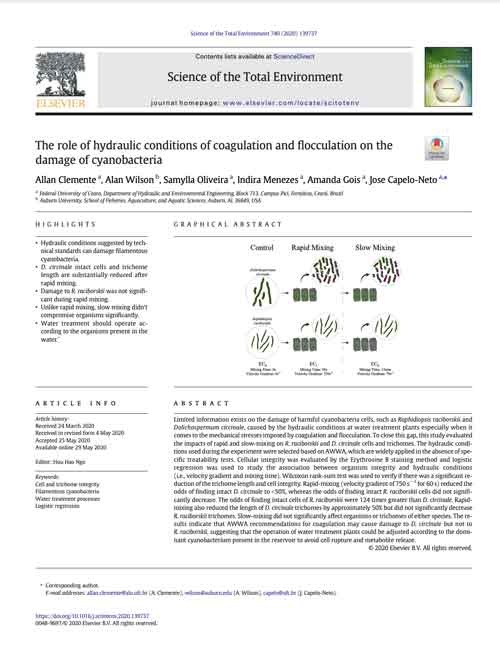
Barros, M. U. G., A. E. Wilson, J. I. R. Leitão, S. P. Pereira, R. P. Buley, E. G. Fernandez-Figueroa, and J. Capelo-Neto. 2019. Environmental factors associated with toxic cyanobacterial blooms across 20 drinking water reservoirs in a semi-arid region of Brazil. Harmful Algae 86:128-137.

Abstract

Cyanobacteria are known to produce a wide variety of bioactive, toxic secondary metabolites generally described as hepatotoxins, neurotoxins, cytotoxins, or dermatoxins. In Brazil, the regular monitoring of cyanobacterial toxins has intensified after the death of 65 patients in a hemodialysis clinic in Caruaru in the state of Pernambuco due to microcystin exposure. The primary objective of this study was to use multivariate statistics that incorporated environmental parameters (both biotic and abiotic) to forecast blooms of cyanobacteria and their toxic secondary metabolites in 20 drinking water reservoirs managed by the Water Treatment Company of Ceará (CAGECE) in the semi-arid region of Ceará, Brazil. Across four years (January 2013 to January 2017), 114 different phytoplankton taxa were identified, including 24 cyanobacterial taxa. In general, Ceará reservoirs were dominated by cyanobacteria due to eutrophication but also because of the dry and warm climate found throughout the region. Interestingly, specific cyanobacterial taxa were influenced by different biotic and abiotic factors. For example, nitrogen-to-phosphorus (N:P) and evaporation were positively related to saxitoxin-producing taxa, especially Raphidiopsis raciborskii, while temperature, electrical conductivity, total phosphorus, and transparency (measured as Secchi depth) were positively associated with microcystin-producing taxa, such as Microcystis aeruginosa. Climate forecasts predict higher evaporation and temperatures in the semi-arid Ceará region, which will likely magnify droughts and water scarcity as well as promote toxic cyanobacterial blooms in reservoirs in the future. Therefore, understanding the factors associated with algal blooms dominated by specific taxa is paramount for water resource management.

Keywords

Link to Publication

Citation

Chislock, M. F., O. Sarnelle, L. M. Jernigan, V. R. Anderson, A. Abebe, and A. E. Wilson. 2019. Consumer adaptation mediates top-down regulation across a productivity gradient. Oecologia 190:195-205.

Abstract

Humans have artificially enhanced the productivity of terrestrial and aquatic ecosystems on a global scale by increasing nutrient loading. While the consequences of eutrophication are well known (e.g., harmful algal blooms and toxic cyanobacteria), most studies tend to examine short-term responses relative to the time scales of heritable adaptive change. Thus, the potential role of adaptation by organisms in stabilizing the response of ecological systems to such perturbations is largely unknown. We tested the hypothesis that adaptation by a generalist consumer (Daphnia pulicaria) to toxic prey (cyanobacteria) mediates the response of plankton communities to nutrient enrichment. Overall, the strength of Daphnia’s top–down effect on primary producer biomass increased with productivity. However, these effects were contingent on prey traits (e.g., rare vs. common toxic cyanobacteria) and consumer genotype (i.e., tolerant vs sensitive to toxic cyanobacteria). Tolerant Daphnia strongly suppressed toxic cyanobacteria in nutrient-rich ponds, but sensitive Daphnia did not. In contrast, both tolerant and sensitive Daphnia genotypes had comparable effects on producer biomass when toxic cyanobacteria were absent. Our results demonstrate that organismal adaptation is critical for understanding and predicting ecosystem-level consequences of anthropogenic environmental perturbations.

Keywords

Link to Publication

Citation

Buley, R. P., Z. Yang, M. F. Gladfelter, and A. E. Wilson. 2019. Controlling blue-green algal blooms in aquaculture ponds using hydrogen peroxide. Fish Farming News 2019(1):3-5.

Abstract

Excessive blue-green algae (i.e., cyanobacteria) can harm aquatic organisms, including farmed fish. Although algal populations may be beneficial as they acquire excess nutrients, including potentially toxic forms such as nitrite and ammonia, and produce oxygen through photosynthesis, large algal blooms may lead to anoxia as decaying cells are decomposed by bacteria. In addition, some select strains of blue-green algae may produce chemicals that harm fish health (e.g., microcystins, nodularins) or cause fish filets to taste muddy (i.e., geosmin, 2- methylisoborneol). Both situations can cause significant economic losses to fish farmers around the world.

As our understanding of nuisance algal blooms continues to grow, so too do the means to combat these events. Developed methods can often be placed into the groupings of chemical, biological, and physical controls. Of these, chemical controls have been used to great effect; however, there is concern that some approved algaecides may persist in the environment for extended periods of time and, in certain situations, are too broad-spectrum in their toxicity to be practical. Consequently, alternative chemicals are actively being researched. And, although many algaecides exist, hydrogen peroxide (H2O2) has proved quite effective at reducing blue-green algae (Kay et al. 1982), and is currently an approved FDA

aquaculture drug (FDA 2007). This contribution assesses the utility of H2O2 as an algaecide, its application rate, and other factors which may impede its effectiveness.

Keywords

Dowload Publication (PDF)