Citation

Fernandez-Figueroa, E. G.R. P. BuleyM. U.G. BarrosM. F. Gladfelter, W. D. McClimans, and A. E. Wilson. 2021. Carlson’s trophic state index is a poor predictor of cyanobacterial dominance in drinking water reservoirs. AWWA Water Science 3(2):e1219.

Abstract

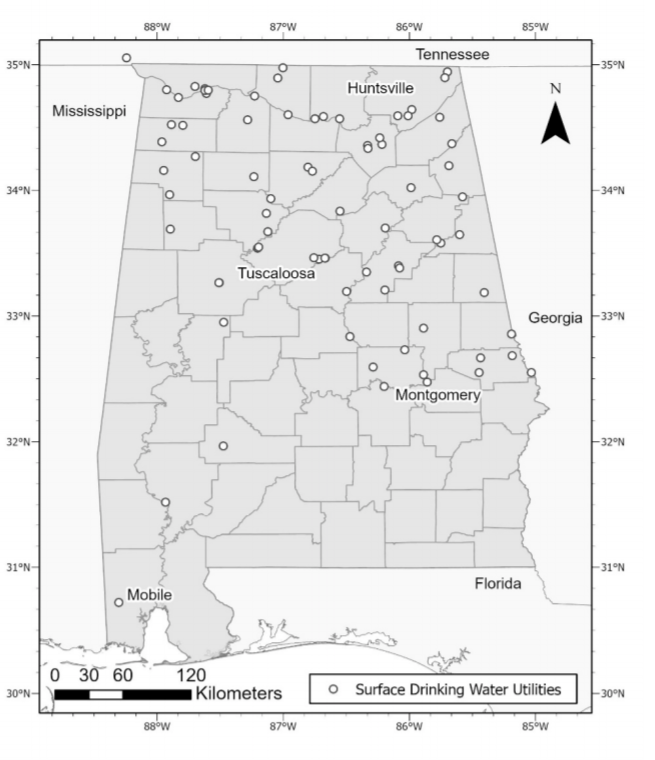
A 20-month survey of 71 surface drinking water utilities across 44 waterbodies was conducted to determine whether the commonly used Trophic State Index (TSI) is a reliable indicator of eutrophication in drinking water sources. Raw water quality results showed that cyanobacteria, cyanotoxins (i.e., microcystin), and taste and odor (T&O) compounds (i.e., 2-methylisoborneol and geosmin) were generally low in the utilities sampled. TSI values based on chlorophyll concentrations (TSI Chl-a) were closely related to phytoplankton, cyanotoxin, and T&O concentrations and indicated that most drinking water sources were mesotrophic or eutrophic. However, TSI values based on total phosphorus (TSI TP) indicated that the drinking water sources were eutrophic or hypereutrophic. These results suggest that TSI Chl-a is a better predictor of cyanobacteria and their compounds than TSI TP. Phytoplankton abundance decreased with depth; therefore, managers should consider switching to deeper intakes when TSI Chl-a values increase to reduce removal costs.

Keywords

Link to Publication

Citation

Valle-Pombrol, A., A. Comas-Gonzalez, D. Castro-Rodriguez, A. Garcia-Moya, and A. E. Wilson. 2021. Planktonic cyanobacteria from the Abreus Reservoir, Cienfuegos, Cuba. Pan-American Journal of Aquatic Sciences 16(1):20-29.

Abstract

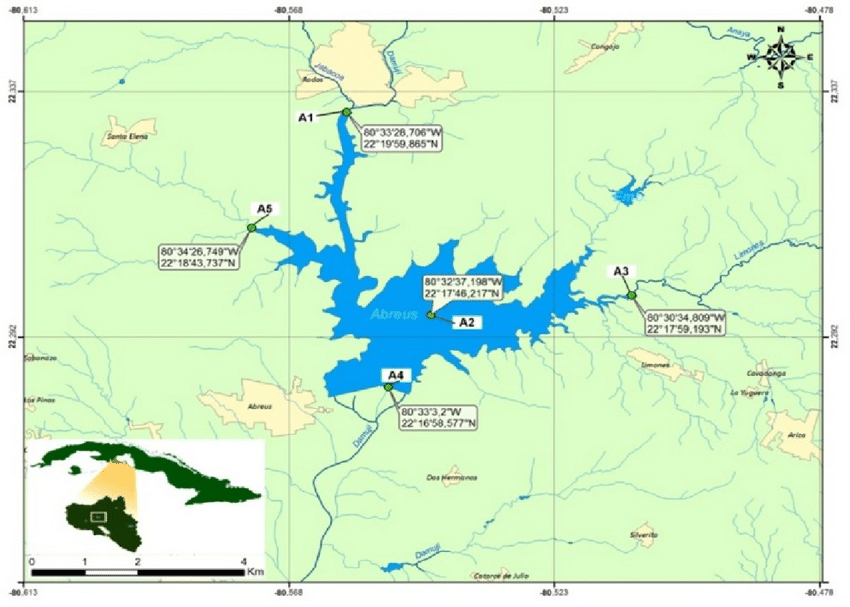
The study of the cyanobacteria that make up the phytoplankton community of reservoirs is very important due to the production of toxins by some phytoplankton taxa. The composition and abundance of cyanobacteria and their relationship to physicochemical variables was determined during six months (March, April, June, September, November and December) in 2018 at five stations in the Abreus Reservoir, which is located in the south center of the Cienfuegos province (Cuba). Eleven new taxa were observed in the reservoir grouped into seven families, 14 genera, and 34 species. The toxigenic genera Microcystis and Raphidiopsis were observed at all collection points throughout the year, presenting a potentially persistent toxicity threat in this reservoir. Semi-accumulative blooms were reported in September. Microcystis sp. and Raphidiopsis sp. were the most abundant genera during observed blooms. The abundance of some cyanobacterial genera, including Microcystis, Aphanocapsa, Raphidiopsis and Dolichospermum, were strongly correlated with water temperature and transparency. Microcystin values are reported for the first time in Abreus Reservoir.

Keywords

Dowload Publication (PDF)

Citation

Bird, G., A. E. Wilson, G. R. Williams, and N. B. Hardy. 2021. Parasites and pesticides act antagonistically on honey bee health. Journal of Applied Ecology 58(5):997-1005.

Abstract

1. Pesticides and parasites have each been linked to increased mortality in western honey bees (Apis mellifera). Currently, it is uncertain if one makes the other worse; several studies have tested for potential synergistic stressor effects, but results have been mixed.

2. Here, we use a hierarchical meta-analysis of 63 experiments from 26 studies to gain a clearer view of the combined effects of parasites and pesticides on honey bee health.

3. We found that combined pesticide-parasite treatments do tend to be deadlier than uncombined treatments but are significantly less deadly than predicted additive or multiplicative effects. In other words, combined treatment effects are not synergistic, but antagonistic.

4. Much of the previous uncertainty about the combined effects of pesticides and parasites on honey bee health can be attributed to a bias in the previous research against stressor antagonism; many researchers have excluded the possibility of antagonism a priori.

5. Synthesis and applications: Meta-analysis shows that when honey bees are stressed by a combination of pesticides and parasites, the combined stress effect is antagonistic, that is, less than the sum of its parts. A better understanding of the mechanisms underlying this antagonism could prove critical for effective management of honey bee health.

Keywords

Link to Publication

Citation

Buley, R. P.C. AdamsA. P. BelfioreE. G. Fernandez-FigueroaM. F. GladfelterB. Garner, D. L. Straus, and A. E. Wilson. 2021. Field evaluation of seven products to control cyanobacterial blooms in aquaculture. Environmental Science and Pollution Research 28:29971-29983.

Abstract

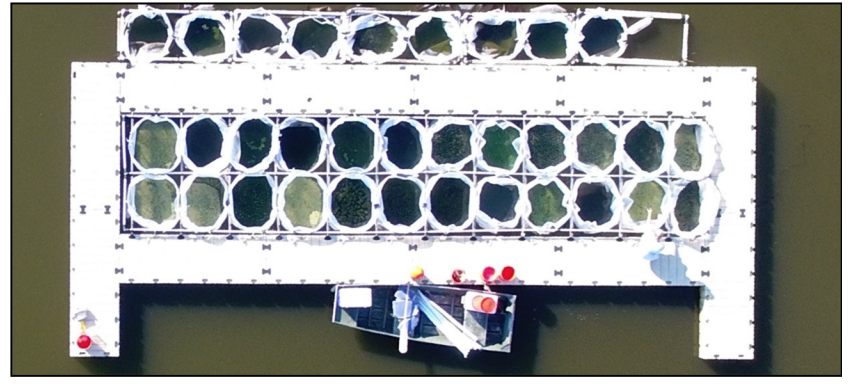
Harmful algal blooms negatively impact water quality in hypereutrophic systems that are common in aquaculture. However, few algaecides are approved for use in food-fish aquaculture. This study assessed the effectiveness of seven products, including hydrogen peroxide (as a concentrated liquid or in granular form (PAK-27)), peracetic acid (as VigorOx SP-15 and Peraclean), copper (as copper sulfate in unchelated (powder) or chelated (Captain) forms), and a clay-based product (as Phoslock) on phytoplankton (including cyanobacteria) and zooplankton biomass. Each product was tested in a 14-day laboratory and 35- day field experiment to assess their short- and long-term performance. Although some products (i.e., copper-based and liquid hydrogen peroxide) quickly reduced phytoplankton, effects were short-lived given that chlorophyll concentrations returned to starting concentrations within 21 days. In contrast, all but one product (i.e., concentrated liquid hydrogen peroxide) maintained low phycocyanin concentrations for 35 days. Zooplankton biomass trends showed large, negative effects for most algaecides; however, zooplankton rebounded for most treatments except for copper-based products. In general, copper-based products remain the most efficient and cheapest choice to reduce total phytoplankton biomass in aquaculture systems. However, peracetic acid-based products effectively and quickly reduced cyanobacteria while having marginal effects on beneficial algae and zooplankton. Such algaecides could be effective alternatives to copper-based products for aquaculture farmers.   Hydrogen peroxide . Peracetic acid . Copper . Clay . Harmful algal blooms . Chemical control

Keywords

Link to Publication

Citation

Barros, M. U.G., J. I.R. Leitão, T. R.B.T. Aranha, S. Simsek, R. P. Buley, E. G. Fernandez-Figueroa, M. F. Gladfelter, A. E. Wilson, and J. Capelo-Neto. 2020. Icyano: A cyanobacterial bloom vulnerability index for drinking water treatment plants. Water Supply 20(8):3517-3530. 

Abstract

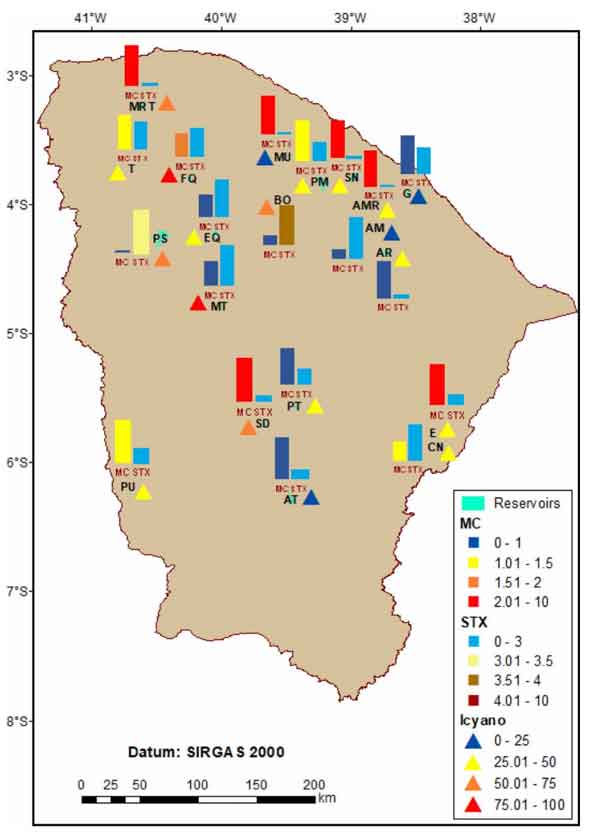
Managing freshwater systems has become a challenge for global water utilities given that cyanobacterial blooms have been increasing in frequency and intensity. Consequently, a water quality index that uses conventional measurements to assess toxic cyanobacterial hazards and guide the selection of proper treatment technologies could benefit water resource managers about water quality parameters routinely analyzed in line with environmental changes. An index model, called Icyano, showed that chlorophyll-a, cyanobacterial concentration, and total nitrogen were most important for the index. All reservoirs classified as good by Icyano used direct filtration water treatment technology. Many of the medium Icyano-classified reservoirs used a pre-treatment unit followed by a direct filtration unit. Two reservoirs that were classified as bad or very bad have been utilizing pre-treatment þ direct filtration or a complete cycle technology, respectively. As the Icyano index increases, water treatment plants should switch from direct filtration to using a pre-treatment to improve finished water quality. Findings from this project suggest that the direct filtration technology initially used in water treatment plants is not capable of meeting the current water quality guidelines in reservoirs that contain adverse water quality conditions, mostly related to an increase in toxic cyanobacterial blooms. As such, based on our findings, we recommend prioritizing financial resources towards pre-treatment technology or changes to more advanced technologies when Icyano index values increase.

Keywords

Link to Publication

Citation

McCain, S., R. R. Sim, E. W. Howerth, S. Aschenbroich, S. G.M. Kirejczyk, B. McHale, C. Jerry, J. J. Kottwitz, A. E. Wilson, and R. McManamon. 2020. Myonecrosis and death due to presumed microcystin toxicosis in American white pelicans (Pelecanus erythrorhyncos). Journal of Zoo and Wildlife Medicine 51(2):407-415.

Abstract

Over a period of 5 mo, seven out of eight American white pelicans (Pelecanus erythrorhynchos) housed on a spring-fed pond at a zoo died or were euthanized. Clinical signs included inability to stand, anorexia, and weight loss. Clinicopathologic findings included heterophilic leukocytosis and elevated creatine kinase and aspartate aminotransferase. Histopathologic findings on all pelicans demonstrated severe, chronic, diffuse rhabdomyofiber degeneration and necrosis, making vitamin E deficiency a differential diagnosis despite routine supplementation. Based on tissue and pond water assays for the cyanobacterial toxin, microcystin, toxicosis is suspected as the inciting cause of death in these cases. We hypothesize that vitamin E exhaustion and resultant rhabdomyodegeneration and cardiomyopathy were sequelae to this toxicosis.

Keywords

Link to Publication

Citation

Clemente, A., A. E. Wilson, S. Oliveira, I. Menezes, A. Gois, and J. Capelo-Neto. 2020. The role of hydraulic conditions of coagulation and flocculation on the damage of cyanobacteria. Science of the Total Environment 740:139737.

Abstract

Limited information exists on the damage of harmful cyanobacteria cells, such as Raphidiopsis raciborskii and Dolichospermum circinale, caused by the hydraulic conditions at water treatment plants especially when it comes to the mechanical stresses imposed by coagulation and flocculation. To close this gap, this study evaluated the impacts of rapid and slow-mixing on R. raciborskii and D. circinale cells and trichomes. The hydraulic conditions used during the experiment were selected based on AWWA, which are widely applied in the absence of specific treatability tests. Cellular integrity was evaluated by the Erythrosine B staining method and logistic regression was used to study the association between organism integrity and hydraulic conditions (i.e., velocity gradient and mixing time). Wilcoxon rank-sum test was used to verify if there was a significant reduction of the trichome length and cell integrity. Rapid-mixing (velocity gradient of 750 s−1 for 60 s) reduced the odds of finding intact D. circinale to <50%, whereas the odds of finding intact R. raciborskii cells did not significantly decrease. The odds of finding intact cells of R. raciborskii were 124 times greater than D. circinale. Rapid mixing also reduced the length of D. circinale trichomes by approximately 50% but did not significantly decrease R. raciborskii trichomes. Slow-mixing did not significantly affect organisms or trichomes of either species. The results indicate that AWWA recommendations for coagulation may cause damage to D. circinale but not to R. raciborskii, suggesting that the operation of water treatment plants could be adjusted according to the dominant cyanobacterium present in the reservoir to avoid cell rupture and metabolite release

Keywords

Link to Publication

Citation

Guo, J., Y. Bao, R. Davis, A. Abebe, A. E. Wilson, and D. A. Davis. 2020. Application of meta-analysis toward understanding the effect of adding a methionine hydroxy analog in the diet on growth performance and feed utilization of fish and shrimp. Reviews in Aquaculture 12(4):2316-2332.

Abstract

Methionine hydroxy analogue (MHA) has been widely used and shows positive effects on growth in poultry, swine, ruminant and aquatic animals. Nevertheless, the utilization efficiency of methionine hydroxy analogue remains controversial considering the wide variation in effects across studies, feeding parameters and environmental culture conditions. Meta-analysis can quantify the effect of adding MHA on animal performance. Here, we analysed the effect of MHA-supplemented diets on the final weight (FW), per cent weight gain (WG), protein efficiency ratio (PER), feed conversion ratio (FCR) and feed efficiency (FE) in common, diverse aquaculture taxa. To conduct the meta-analyses, twenty-three published studies were included that accounted for 249 effect sizes estimated across eight fish and one shrimp species. The effect size (measured as the standardized mean difference; Hedges’ g) of response parameters between MHA level in a diet formulation and an MHA-less control condition was calculated. Based on these results, adding MHA in the diet can significantly improve FW, WG, PER, and FE and decrease FCR for fish rather than shrimp. Using meta-regression analysis, there was a significant quadratic linear relationship between MHA addition and effect size for FW (P = 0.002 for MHA, P = 0.042 for MHA2 ), and significant linear relationships between MHA addition and effect size for WG (P = 0.0005) and FCR (P = 0.002). There was no significant relationship, linear or non-linear, between the MHA addition and effect size for FE (P = 0.985) and PER (P = 0.461). In all, when properly dosed in diets, MHA can significantly improve aquaculture production for fish.

Keywords

Link to Publication

Citation

Belfiore, A. and A. E. Wilson. 2020. Improving catfish pond water quality by reducing planktivorous fish abundance. Fish Farming News 2020(1):8-10. 

Abstract

In highly productive aquaculture ponds, conditions for phytoplankton blooms are intensified. The presence of increased nutrient availability, shallow waters with regular mixing through aeration, warm temperatures, and high intensity sunlight common in these settings often leads to dense blooms of phytoplankton throughout most of year. However, cyanobacteria (also commonly called, blue-green algae) often dominate the phytoplankton community during the growing season (May-October) and can negatively affect aquaculture production through the release of off-flavor compounds, such as geosmin and 2-methylisoborneol (MIB), and toxins, such as the liver toxin microcystin and/or neurotoxin saxitoxin. In extreme cases, phytoplankton blooms can promote hypoxic conditions when they degrade and lead to fish kills that can devastate producers’ livelihood. Catfish aquaculture ponds may include catfish of mixed sizes due to incomplete harvesting as well as intentionally or unintentionally introduced planktivorous fish, such as threadfin shad, gizzard shad, bluegill, green sunfish, and/or fathead minnows. Reports suggest that some planktivorous fish eat and possibly control phytoplankton, although there is a long history of research that shows that these fish eat zooplankton (small animals that consume phytoplanktrophic cascade). When one level of the ecosystem has been altered, it will directly and indirectly affect the rest of the system.

Keywords

Dowload Publication (PDF)

Citation

Powers, M. J., A. E. Wilson, K. B. Heine, and G. E. Hill. 2020. The relative importance of various mating criteria in copepods. Journal of Plankton Research 42(1):19-30. 

Abstract

To produce viable offspring, organisms may assess mates via criteria that include traits, such as sex, species, age, reproductive status, population identity and individual quality. Copepods are small, ubiquitous crustaceans that live in freshwater and marine systems around the world whose patterns of mate choice have been long studied in numerous species. Herein, we synthesized decades of experiments describing sexual selection in copepods to assess the importance of mating criteria. We used formal, meta-analytical techniques and mixed modeling to quantify the likelihood of non-random mating associated with mating criteria. In our synthesis of the scientific literature, we found that copepods use several criteria when assessing mates and that these criteria are associated with different likelihood estimates. We report the strongest likelihood of non-random mating when copepods assess the reproductive status of females or when copepods select between conspecific vs. heterospecific mates. We found weak likelihood of non-random mating in studies that provide mates from different populations or that manipulate operational sex ratio. Studies that directly test assessment of individual quality are sparse in copepods when compared to equivalent studies in vertebrates, and we encourage future researchers to explore whether copepods use individual characteristics as key mating criteria.

Keywords

Link to Publication