Citation

Cabral, D. A. R., A. E. Wilson, and M. W. Miller. 2022. The effect of implicit learning on motor performance under psychological pressure: A systematic review and meta-analysis. Sport, Exercise, and Performance Psychology 11(3): 245–26.

Abstract

Motor skills learned implicitly should be less susceptible to deterioration under psychological pressure (i.e., choking) than skills learned more explicitly. In this systematic review and meta-analysis, we investigated that prediction. A systematic search was conducted for articles that had participants learn a motor skill implicitly relative to a comparison group and had both groups perform the skill under low- and high-pressure conditions. Ten studies with a median of nine participants/group met inclusion criteria. Seven of ten studies reported an advantage of learning a motor skill implicitly when performing under psychological pressure. Moreover, a multivariate random-effects metaanalysis revealed that participants who learned a motor skill implicitly performed better under a high-pressure condition than a low-pressure condition, Hedges’ gav = −1.17, 95% lower CI [−1.61], upper CI [−0.74], whereas participants in the comparison group performed similarly between conditions, Hedges’ gav = 0.19, 95% lower CI [ −0.33], upper CI [ 0.71]. For the implicit learning group, a funnel plot of the relationship between effect size and standard error showed an asymmetrical distribution and a significant relationship, indicating bias. In conclusion, results confirm the prediction that implicit motor learning benefits performance under pressure. However, this effect might be distorted by bias and driven by underpowered studies, likely causing it to be overestimated. We suggest the advantage of learning a motor skill implicitly versus explicitly on performance under pressure be assumed to be moderately sized, pending future research, and encourage preregistered studies with larger sample sizes to estimate the effect more accurately.

Link to Publication

Citation

Belfiore, A., R. P. Buley, E. G. Fernandez-Figueroa, M. Gladfelter, and A. E. Wilson. 2021. Zooplankton as an alternative method for controlling phytoplankton in catfish pond aquaculture. Aquaculture Reports 21:100897.

Abstract

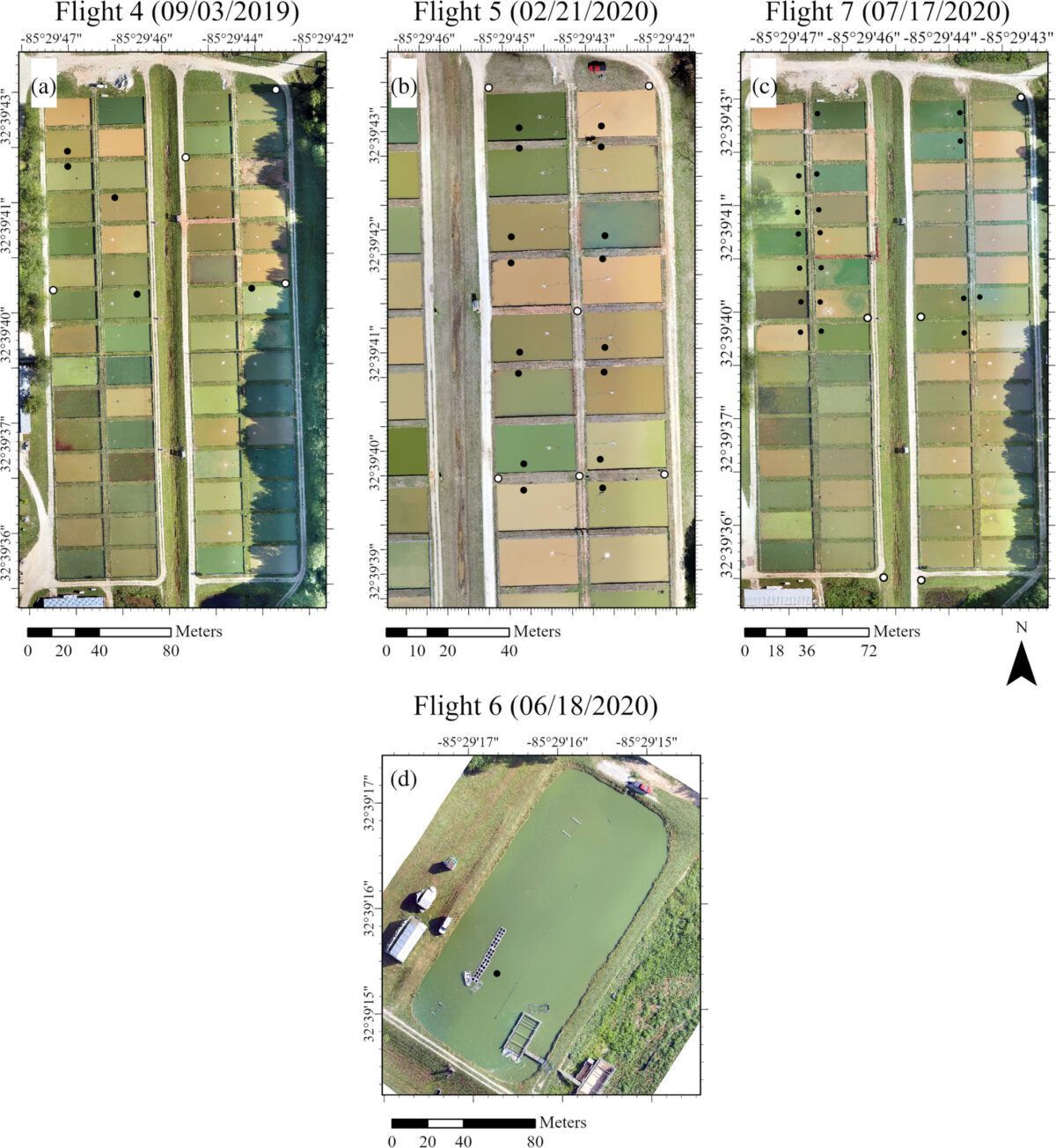
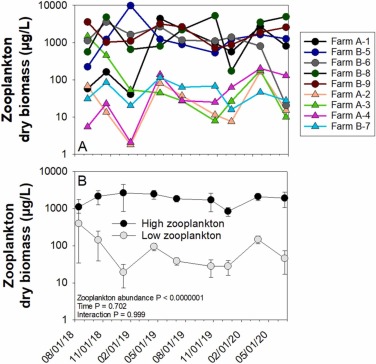
In pond aquaculture, production of toxins and off-flavor compounds by cyanobacteria can negatively affect fish health and production. Studies have explored chemical or physical methods for controlling algal blooms in aquaculture ponds, which although effective, may be short-lived and can negatively impact non-target organisms, including aquaculture species. Food web manipulations have a long history in lake and fisheries management to improve water quality, but have been rarely considered in aquaculture. This study examined zooplankton and phytoplankton communities, cyanobacterial toxins, and nutrients in nine catfish aquaculture farm-ponds in west Alabama, USA. The goal of this project was to track phytoplankton and zooplankton abundances with respect to each other, with and without efforts to reduce zooplanktivorous fish in some of the ponds. During this project, farm managers reduced zooplanktivorous fish abundance in select ponds to create a large-scale field experiment that addressed the role of zooplankton control of phytoplankton in hypereutrophic catfish aquaculture ponds when zooplanktivorous fish were or were not excluded. There was a strong negative effect of zooplankton on phytoplankton, including cyanobacteria, despite high nutrient concentrations. Although high zooplankton ponds sustained elevated zooplankton biomass during much of this study, including when pond temperatures exceeded 30 °C, the effect of zooplankton on phytoplankton was most pronounced during the non-growing season (November–April). In addition, total ammonia nitrogen was significantly higher in high zooplankton ponds, which could lead to ammonia toxicity in fish at elevated temperature and pH. Our findings suggest that zooplankton biomanipulation may be an efficient method to control algal blooms in farm-pond catfish aquaculture.

Keywords

Link to Publication

Citation

Green, W. R., A. B. Hoos, A. E. Wilson, and E. N. Heal. 2021. Development of a screening tool to examine lake and reservoir susceptibility to eutrophication in selected watersheds of the eastern and southeastern United States. U.S. Geological Survey Scientific Investigations Report 2021–5075, 59 pages 

Abstract

This report describes a new screening tool to examine lake and reservoir susceptibility to eutrophication in selected watersheds of the eastern and southeastern United States using estimated nutrient loading and flushing rates with measures of waterbody morphometry. To that end, the report documents the compiled data and methods (R-script) used to categorize waterbodies by Carlson’s Trophic State Index. Assessments were completed for 232 lakes and reservoirs having a surface area greater than or equal to 0.1 square kilometer in watersheds that drain to the Atlantic and eastern Gulf of Mexico coasts of the United States and in watersheds within the Tennessee River Basin. Waterbodies were categorized by type—natural lakes, headwater reservoirs, and downstream reservoirs—and were assessed independently. Recursive partitioning and the model-based boosting routine were used to create four-node regression trees to group waterbodies into five endpoints from low-to-high measures of Secchi depth, and concentrations of chlorophyll and microcystin according to shared nutrient loading, flushing rate, and morphometric characteristics. Trophic state designations were assigned based on the average value within each of the five endpoints. An application (procedure) is provided using the tool to examine the susceptibility of a given waterbody of interest to eutrophication. Results of this study can aid water-resource managers in prioritizing lake and reservoir protection and restoration efforts based on the susceptibility of these waterbodies to eutrophication relative to nutrient loading, flushing rate, and morphometric characteristics.

Link to Publication

Citation

Buley, R. P., H. E. Correia, A. Abebe, T. B. Issa, and A. E. Wilson. 2021. Predicting microcystin occurrence in freshwater lakes and reservoirs: assessing environmental variables. Inland Waters 11(3):430-444. 

Abstract

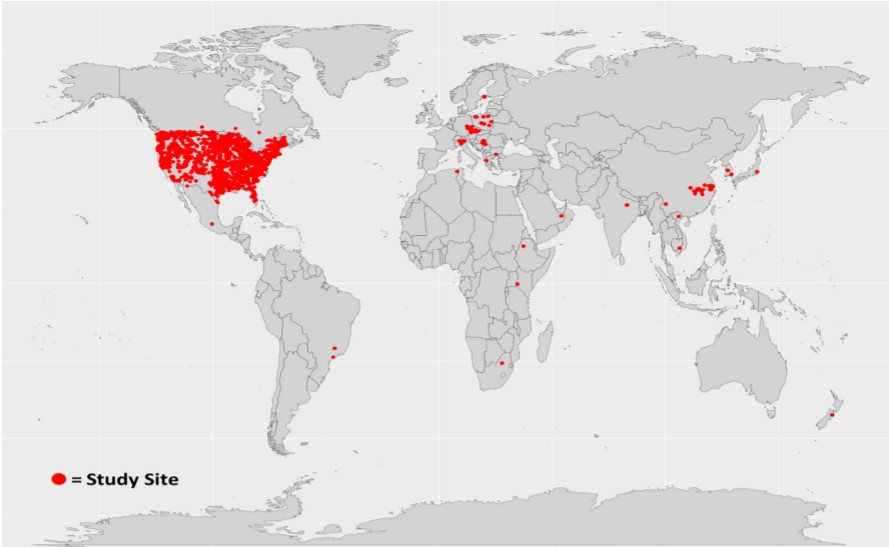
Determining the environmental conditions that influence the occurrence and concentration of the cyanobacterial toxin microcystin (MC) is a critical step for predicting cases in which the toxin will adversely affect drinking water sources, recreational waterbodies, and other freshwater ecosystems. Although widely studied, little consensus exists regarding the factors that influence MC on a global scale. The objective of this study was to identify the environmental variables most strongly associated with MC concentrations using observational data from lakes and reservoirs around the world while also addressing the substantial proportions of missing values that a large aggregated dataset often involves. A total of 124 studies containing data from an estimated 2040 lakes and reservoirs in 22 countries was used to construct a global dataset. Variables including <35% of non-missing observations were removed prior to analysis. Missing values for the remaining 12 predictors of MC were imputed using an iterative imputation algorithm based on a random forest approach. Variable selection was performed with generalized additive modeling on the complete case and imputed datasets. Models applied to the imputed data produced lower prediction errors than those fit to the complete dataset. Variables of greatest significance to MC concentration included location (longitude–latitude pairs), total nitrogen, turbidity, and pH. Total phosphorus was not found to be a strong predictor of MC. In addition to assisting water resource managers in protecting their waterbodies against MC, the presented methodologies may provide a useful framework for future water quality modeling while accounting for varying proportions of missing data.

Keywords

Link to Publication

Citation

Odom, S., H. Boso, S. Bowling, S. Cotner, C. Creech, A. G. Drake, S. Eddy, S. Fagbodun, S. Hebert, A. James, J. Just, J. R. St. Juliana, M. Shuster, S. Thompson, R. Whittington, B. Wills, A. Wilson, K. R. Zamudio, M. Zhong, and C. J. Ballen. 2021. Meta-analysis of gender performance gaps in undergraduate natural science courses. CBE-Life Sciences Education 20(2):ar40.

Abstract

To investigate patterns of gender-based performance gaps, we conducted a meta-analysis of published studies and unpublished data collected across 169 undergraduate biology and chemistry courses. While we did not detect an overall gender gap in performance, heterogeneity analyses suggested further analysis was warranted, so we investigated whether attributes of the learning environment impacted performance disparities on the basis of gender. Several factors moderated performance differences, including class size, assessment type, and pedagogy. Specifically, we found evidence that larger classes, reliance on exams, and undisrupted, traditional lecture were associated with lower grades for women. We discuss our results in the context of natural science courses and conclude by making recommendations for instructional practices and future research to promote gender equity.

Keywords

Link to Publication

Citation

Buley, R. P., A. Kelly, L. Roy, E. G. Fernandez-Figueroa, M. Gladfelter, A. Belfiore, and A. E. Wilson. 2021. Controlling Microcystis blooms in Alabama catfish aquaculture. Alabama Cooperative Extension Fact Sheet ANR-2757.  5pp.

Abstract

Blue-green algae, also known as cyanobacteria, are microscopic organisms frequently found in aquaculture ponds in the southeastern United States.

Although blue-green algae are common in freshwater systems, blooms (dense accumulations of these organisms) can lead to serious issues for catfish farmers. Some, but not all, blue-green algae can produce compounds that are toxic to catfish or may lead to unwanted taste and odors in fish fillets. Bloom formations may also create low oxygen conditions at night or as cells decay following a crash in a bloom. Of the blue-green algal species in the southeast, Microcystis is among the most common and often leads to problems for catfish farmers.

Microcystis blooms often form distinctive Kelly green scums at the water surface (figure 1). Many other kinds of blue-green algae, other kinds of algae, and aquatic plants (such as duckweed or watermeal) form surface blooms or mats during certain times of the year that are army green or various other shades (figures 2a and 2b). So, more formal identification of the algae is needed. Microcystis can be identified using a microscope and is typically distinguishable as groups of small, circular cells (colonies) within a jelly-like mass (figures 3a and b). Your county Extension agent can assist in identification, if needed.

Link to Publication

Citation

Clark, A., B. Howell, A. E. Wilson, and T. Schwartz. 2021. Draft genomes for one Microcystis-resistant and one Microcystis-sensitive strain of the water flea, Daphnia pulicariaG3 11(11):jkab266

Abstract

Daphnia species are well-suited for studying local adaptation and evolutionary responses to stress(ors) including those caused by algal blooms. Algal blooms, characterized by an overgrowth (bloom) of cyanobacteria, are detrimental to the health of aquatic and terrestrial members of freshwater ecosystems. Some strains of Daphnia pulicaria have demonstrated resistance to toxic algae and the ability to mitigate toxic algal blooms. Understanding the genetic mechanism associated with this toxin resistance requires adequate genomic resources. Using whole-genome sequence data mapped to the Daphnia pulex reference genome (PA42), we present reference-guided draft assemblies from one tolerant and one sensitive strain of D. pulicaria, Wintergreen-6 (WI-6), and Bassett-411 (BA-411), respectively. Assessment of the draft assemblies reveal low contamination levels, and high levels (95%) of genic content. Reference scaffolds had coverage breadths of 98.9–99.4%, and average depths of 33X and 29X for BA-411 and WI-6, respectively. Within, we discuss caveats and suggestions for improving these draft assemblies. These genomic resources are presented with a goal of contributing to the resources necessary to understand the genetic mechanisms and associations of toxic prey resistance observed in this species.

Keywords

Link to Publication

Citation

Hyman, M., Q. Wang, A. E. Wilson, S. Adhikari, and B. T. Higgins. 2021. Production of Daphnia zooplankton on wastewater-grown algae for sustainable conversion of waste nutrients to fish feed. Journal of Cleaner Production 310:127501.

Abstract

This study investigates the upcycling of nutrients in anaerobic digestate via algal biomass to zooplankton which is a natural fish feed. There are no published studies, to the authors’ knowledge, on the viability of growing zooplankton on digestate-grown algae. Here, the viability of digestate-grown Chlorella sorokiniana as a feed for the large-bodied generalist zooplankter, Daphnia, was tested. It was found that Daphnia fed with digestate-grown C. sorokiniana led to 1.5- to 14-fold greater Daphnia population growth than Daphnia fed with Ankistrodesmus sp., an established feed. A sterol analysis of C. sorokiniana found 4–6 mg/g of the sterol, ergosterol, and nearly double the α-linolenic acid content of Ankistrodesmus. Sterols and α-linolenic acid are often-limiting nutrients in Daphnia diets. Other factors hypothesized to influence nutrient transfer from algae to Daphnia were also tested, including algal feed concentration, sterol supplementation, and the presence of digestate bacteria in the algal feed. The presence of bacteria and exogenous cholesterol had no significant impacts on Daphnia growth. The higher feed concentration (5 mg C/L) led to 3 times higher Daphnia growth than the low feed concentration (1.5 mg C/L) even though the latter concentration has frequently been used by other researchers. Finally, it was determined that the feed conversion ratio of algae to Daphnia fell in the range of 0.19–0.31 and that trophic transfer of carbon was 25–28% while that of nitrogen was 29–34% in this un-optimized system. These values compare favorably to livestock feed conversion efficiency but additional losses will occur when Daphnia are fed to fish. These results show that cultivation of Daphnia on digestate-grown algae is technically feasible.

Keywords

Link to Publication

Citation

Fernandez-Figueroa, E. G., A. P. Belfiore, and A. E. Wilson. 2021. Drones for monitoring “blue-greens” in catfish aquaculture ponds. Fish Farming News 2021(1):16-17.

Abstract

Drones, unoccupied aerial vehicles, are commonly used in agriculture to determine the health of economically important crops, such as corn and wheat. Similar methods are currently being developed to measure the abundance of beneficial green algae and potentially toxic cyanobacteria, commonly called “blue-green algae”, in aquaculture ponds. While currently in the developmental stages, these methods could be instrumental in informing important management decisions. Blue-green algae thrive in aquaculture ponds throughout the southeastern US during much of the year, especially during the summer, due to the high nutrient inputs in the form of catfish feed. Blue-green algae blooms can lead to fish kills through the production of toxins (i.e., cyanotoxins) or when bacteria decompose dead organic matter leading to depleted dissolved oxygen levels. Off-flavor issues are also commonly associated with blue-green algae blooms, as some species produce compounds such as geosmin and 2-methylisoborneol (MIB) that affect the flavor and reduce the market value of catfish fillets. To mitigate the economic impacts associated with blue-green algae, aquaculture managers employ EPA-approved algaecides, such as copper sulfate, to reduce cyanobacterial abundance. While copper treatment is an effective tool for managing blue-green algae, it can also remove beneficial green algae and diatoms that make up the base of aquatic food webs, as well as other microbes, such as bacteria, that play a role in reducing ammonia and nitrite concentrations. Therefore, determining if blue-green algae concentrations are high enough to warrant chemical treatment is important for maintaining healthy pond ecosystems

Keywords

Dowload Publication (PDF)

Citation

Chislock, M. F., B. K. Olsen, J.J. Choi, A. Abebe, T. L. Bleier, and A. E. Wilson. 2021. Contrasting patterns of 2-methylisoborneol (MIB) vs. geosmin across depth in a drinking water reservoir are mediated by cyanobacteria and actinobacteria. Environmental Science and Pollution Research 28:32005-32014.

Abstract

Taste and odor episodes caused by off-flavor secondary metabolites, such as 2-methylisoborneol (MIB) and geosmin, pose one of the greatest challenges for drinking water utilities around the world. The prevalence of these compounds is predicted to increase in the future as a function of nutrient enrichment and elevated temperatures of surface drinking water sources. We conducted a manipulative field experiment in a drinking water reservoir to elucidate patterns for two taste and odor compounds, MIB and geosmin, as well as two taxa known to produce these compounds, phytoplankton (more specifically, cyanobacteria) and actinobacteria, across different depths in response to nutrient enrichment with two common dissolved nitrogen forms, organic urea or inorganic nitrate. In general, we found that MIB levels increased by greater than 250% with nutrient enrichment mediated by increased phytoplankton biomass. However, the effect of the fertilization treatments on MIB decreased with depth with a 35% reduction at 7 m versus 1.5 m. In contrast, geosmin levels reached a maximum at the lowest measured depth (7 m), were unaffected by the fertilization treatments, and followed a similar pattern to the abundance of actinobacteria. Thus, our data suggest that the positive response of phytoplankton (e.g., cyanobacteria, such as Oscillatoria species) to the fertilization treatments is likely responsible for increased MIB, while geosmin concentrations may be a function of actinobacteria-mediated decomposition in the hypolimnion in our study system.

Keywords

Link to Publication