Citation

Goto, D., K. Lindelof, D. L. Fanslow, S. A. Ludsin, J. J. Roberts, H. A. Vanderploeg, A. E. Wilson, and T. O. Höök. 2012. Ecological consequences of hypolimnetic hypoxia on survival and growth potential of Daphnia mendotae in the central basin of Lake Erie. Aquatic Biology 16:217-227.

Abstract

Diel vertical migration (DVM) of some zooplankters in eutrophic lakes is often compressed during peak hypoxia. To better understand the indirect consequences of seasonal hypolimnetic hypoxia, we integrated laboratory-based experimental and field-based observational approaches to quantify how compressed DVM can affect growth of a cladoceran, Daphnia mendotae, in central Lake Erie, North America. To evaluate hypoxia tolerance of D. mendotae, we conducted a survivorship experiment with varying dissolved oxygen concentrations, which demonstrated high sensitivity of D. mendotae to hypoxia (≤2 mg O2 l−1), supporting the field observations of their behavioral avoidance of the hypoxic hypolimnion. To investigate the effect of temporary changes in habitat conditions associated with the compressed DVM, we quantified the growth of D. mendotae, using a 3 (food quantity) × 2 (temperature) factorial design laboratory experiment. Neither food quantity nor temperature affected short-term growth in body length of D. mendotae. However, D. mendotae RNA content (an index of short-term condition) decreased under starvation, indicating an immediate response of short-term feeding on condition. We further evaluated the effect of hypoxia-induced upward shifts in vertical distribution by quantifying the RNA content of D. mendotae from central Lake Erie before and during peak hypoxia. Despite high temperature and food quantity in the upper water column, RNA content in field-collected D. mendotae remained low during peak hypoxia. Furthermore,D. mendotae collected during peak hypoxia consisted of only small-bodied (<~1.25 mm) individuals, suggesting that behavioral avoidance of the hypoxic hypolimnion may also have indirect fitness costs.
Dowload Publication (PDF)

Citation

Fowler, S., W. Deutsch, A. E. Wilson, and E. Reutebuch. 2012. Tallapoosa River basin numerical nutrient criteria for wadeable streams. Final Report for the Alabama Department of Environmental Management, Agreement ADEM-C00594051.

Abstract

Physical, chemical and biological data were collected by the Alabama Department of Environmental Management (ADEM) for this nutrient criteria study during the 2010 growing season at 34 sites in the Piedmont Ecoregion (Ecoregion 45) in east-central Alabama. These data were from stream, river and reservoir embayment sample sites, and were the basis of analyses to evaluate the effects of nutrient concentrations (nitrogen and phosphorus) on aquatic biota. Separate analyses were conducted for stream/river data and for reservoir embayment data.

Levels of nutrient enrichment of sampled waterbodies ranged from very low to high, based on phosphorus concentrations, with stream/river growing season mean phosphorus levels ranging from 0.011 mg/L to 0.468 mg/L, and embayment growing season mean phosphorus levels ranging from 0.009 mg/L to 0.053 mg/L. Twenty-fifth percentile values for the concentration of total phosphorus in the Tallapoosa Basin streams, river and reservoir embayments sampled in 2010 were 0.025 mg/L, 0.034 mg/L and 0.012 mg/L respectively. Comparing this reservoir embayment twenty-fifth percentile value (0.012 mg/L) to the value reported by EPA, 0.0225 mg/L for Ecoregion 45 (Piedmont), it appears that the Tallapoosa Basin reservoir sites are nutrient poor relative to phosphorus levels of the entire Piedmont (EPA 2000).

Results of Classification and Regression Tree (CART) analyses yielded significant breakpoints for both stream/river and reservoir embayment datasets. In most cases, total phosphorus was the nutrient driving changes in response variables for both reservoir embayments and streams/rivers.

Reservoir embayment CART breakpoints in photic zone depth, Secchi depth and chlorophyll a levels occurred at total phosphorus (TP) concentrations in the range of 20-29 µg/L. Relationships between TP and photic and Secchi depth were inverse, and between TP and chlorophyll a was direct – TP increased with higher measurements of chlorophyll a, as expected.

CART breakpoints for fish metrics from stream/river sampling occurred at TP concentrations in the range of 16-23 µg/L. Relationships between TP and fish metrics were inverse – increased TP was observed with decreases in fish species and Index of Biotic Integrity, as expected. Stream/river CART breakpoints for macroinvertebrate metrics were mixed. TP was the driver for some variables, and total nitrogen (TN) for others. All metrics were directly related to TP, except for percent nutrient tolerant individuals and percent tolerant individuals, which were related to TN. Relationships between nutrient levels and stream biota represented as macroinvertebrate communities for lotic environments sampled in this study were not well defined.

Dowload Publication (PDF)

Citation

Kozlowsky-Suzuki, B., A. E. Wilson, and A. Ferrao-Filho. 2012. Biomagnification or biodilution of microcystins in aquatic foodwebs? Meta-analyses of laboratory and field studies. Harmful Algae 18:47-55

Abstract

Cyanobacteria, conspicuous photoprokaryotes in aquatic ecosystems, may produce secondary metabolites such as the hepatotoxins, microcystins (MC). While MC have been quantified in numerous aquatic consumers across a variety of ecosystems, there is still debate whether biomagnification or biodilution of MC generally occurs in aquatic foodwebs. Given the threat that MC pose to aquatic foodwebs, livestock, and humans, we synthesized data from 42 studies on the concentration of MC in consumers, such as zooplankton, decapods, molluscs, fishes, turtles and birds, to determine the dominant process. To compare results across studies, we calculated the biomagnification factor (BMF) as the ratio between the MC concentration measured in consumers and their diet. Biomagnification is indicated when BMF mean and associated 95% confidence intervals (CI) >1. Biodilution is shown if a BMF mean and 95% CI <1. As expected, increasing concentrations of MC in diets resulted in increasing concentrations of MC in consumers. Nevertheless, biodilution of MC was evident for most primary consumers. This finding was robust across four datasets that focused on different aspects of data independence and variance, and may be explained by low hydrophobicity of MC, diet preferences, or detoxification. Zooplankton and zooplanktivorous fish, however, showed some potential for biomagnification (i.e. mean BMF > 1). Plausible, but largely unexplored, possibilities for the relatively higher MC accumulation by these consumers are low detoxification efficiency by zooplankton, MC trophic transfer via the microbial foodweb, contamination of zooplankton net samples with large cyanobacterial colonies and filaments, or the release of both free and bound MC in zooplankton during digestion by fish. Factors related to study design may have influenced the magnitude of MC biodilution. For example, consumers fed diets consisting of highly toxic cyanobacterial lab cultures and large, potentially inedible net phytoplankton showed greater biodilution when compared to seston. Given their hepatotoxic nature, MC concentrations were relatively higher in liver and hepatopancreas tissues than other tissues. Whole organisms exhibited, however, relatively greater MC (i.e. higher BMF) than specific tissues, and this finding could be attributed to the contribution of zooplankton to whole organism MC analyses (89% of BMF estimates > 1). Finally, BMF was positively related to study length showing that longer exposure to toxic food resulted in higher MC accumulation in consumers, which could have important implications in eutrophic or tropical systems where toxic blooms may persist year-round.

Keywords

Link to Publication

Citation

Berry, J. P., E. Lee, K. Walton, A. E. Wilson, and F. Bernal-Brooks. 2011. Microcystin production by a persistent cyanobacterial bloom in Lago de Patzcuaro (Michiacan, Mexico) and apparent bioaccumulation of the toxin in small commercial catches of fish. Environmental Toxicology and Chemistry 30(7):1621-1628.

Abstract

Lago de Patzcuaro is a historically important freshwater fishery in Mexico. The lake is presently characterized by a persistent bloom of cyanobacteria, specifically dominated by recognized producers of toxic microcystins (MCYSTs). We evaluated MCYSTs in sestonic and dissolved fractions of the water column, as well as representative fish species (silversides, Chirostoma spp.; Goodea sp.; and carp, Cyprinus carpio) obtained from local markets and small commercial catches during the bloom. Samples were evaluated primarily by enzyme-linked immunosorbent assay (ELISA), and secondarily by protein phosphatase (PPase) inhibition assay and liquid chromatography-mass spectrometry (LC-MS). Sestonic MCYST concentration (0.02-0.36 µg/L) generally correlated inversely with distance from the bloom, supporting the bloom as the source of the toxin. Several MCYST variants, including MC-LR, -LA and -LY, as well as didemethyl variants, were identified by LC-MS/MS analysis. All three species of fish bioaccumulated MCYSTs in relevant tissues, and toxin content correlated with trophic level, with highest and lowest levels measured in phytoplanktivorous and zooplanktivorous representatives, respectively. Detection of MCYST in silversides and Goodea sp. is particularly relevant because both are consumed in their entirety, including viscera (e.g., liver) known to primarily accumulate MCYST. These results indicate that Lago de Patzcuaro is indeed characterized by a toxigenic bloom, and that commercially important fish species from the lake accumulate toxic MCYST in tissues relevant to human consumption. As such, this system may represent an ideal model of the trophic transfer of MCYSTs and its relevance to human and environmental health.

Keywords

Link to Publication

Citation

White, J. D., R. B. Kaul, L. B. Knoll, A. E. Wilson, and O. Sarnelle. 2011. Large variation in vulnerability to grazing within a population of the colonial phytoplankter, Microcystis aeruginosaLimnology and Oceanography 56(5):1714-1724.

Abstract

We asked if intraspecific variation within a population of the toxic, bloom-forming phytoplankter, Microcystis aeruginosa, leads to differential vulnerability to grazing by the invasive, filter-feeding zebra mussel (Dreissena polymorpha). We performed two series of laboratory feeding experiments in which D. polymorpha were presented with several different sympatric M. aeruginosa clones in a two-species mixture with the high-quality, nutritious alga, Ankistrodesmus falcatus. Mean selectivity across M. aeruginosa clones ranged from near zero (i.e., no feeding on M. aeruginosa) to near one (equal feeding on the two algal species), evidence of maximal variation in grazing vulnerability across twenty clones of M. aeruginosa—a species assumed to be largely ‘inedible’ to grazers—from the same population. This range of vulnerability is essentially equal to that typically measured across all phytoplankton species. Large intraspecific variation in grazing vulnerability, and its ecological consequences, could influence the promotion or control of noxious blooms of toxigenic cyanobacteria.

Keywords

Link to Publication

Citation

Logan, S. W., L. E. Robinson, A. E. Wilson, and W. A. Lucas. 2012. Getting the fundamentals of movement: A meta-analysis of the effectiveness of motor skill interventions in young children as assessed by the test of gross motor development. Child: Care, Health & Development 38(3):305-315.

Abstract

Unlabelled: The development of fundamental movement skills (FMS) is associated with positive health-related outcomes. Children do not develop FMS naturally through maturational processes. These skills need to be learned, practised and reinforced. The objective was to determine the effectiveness of motor skill interventions in children. The following databases were searched for relevant articles: Academic Search Premier, PsycArticles, PsycInfo, SportDiscus and ERIC. No date range was specified and each search was conducted to include all possible years of publication specific to each database. Key terms for the search included motor, skill, movement, intervention, programme or children. Searches were conducted using single and combined terms. Pertinent journals and article reference lists were also manually searched. Inclusion criteria: (1) implementation of any type of motor skill intervention; (2) pre- and post-qualitative assessment of FMS; and (3) availability of means and standard deviations of motor performance. A significant positive effect of motor skill interventions on the improvement of FMS in children was found (d= 0.39, P < 0.001). Results indicate that object control (d= 0.41, P < 0.001) and locomotor skills (d= 0.45, P < 0.001) improved similarly from pre- to post-intervention. The overall effect size for control groups (i.e. free play) was not significant (d= 0.06, P= 0.33). A Pearson correlation indicated a non-significant (P= 0.296), negative correlation (r=-0.18) between effect size of pre- to post-improvement of FMS and the duration of the intervention (in minutes). Motor skill interventions are effective in improving FMS in children. Early childhood education centres should implement ‘planned’ movement programmes as a strategy to promote motor skill development in children.

Keywords

Link to Publication

Citation

Wilson, A. E., R. B. Kaul, and O. Sarnelle. 2010. Growth rate consequences of coloniality in a harmful phytoplankter. PLoS ONE 5(1):e8679.

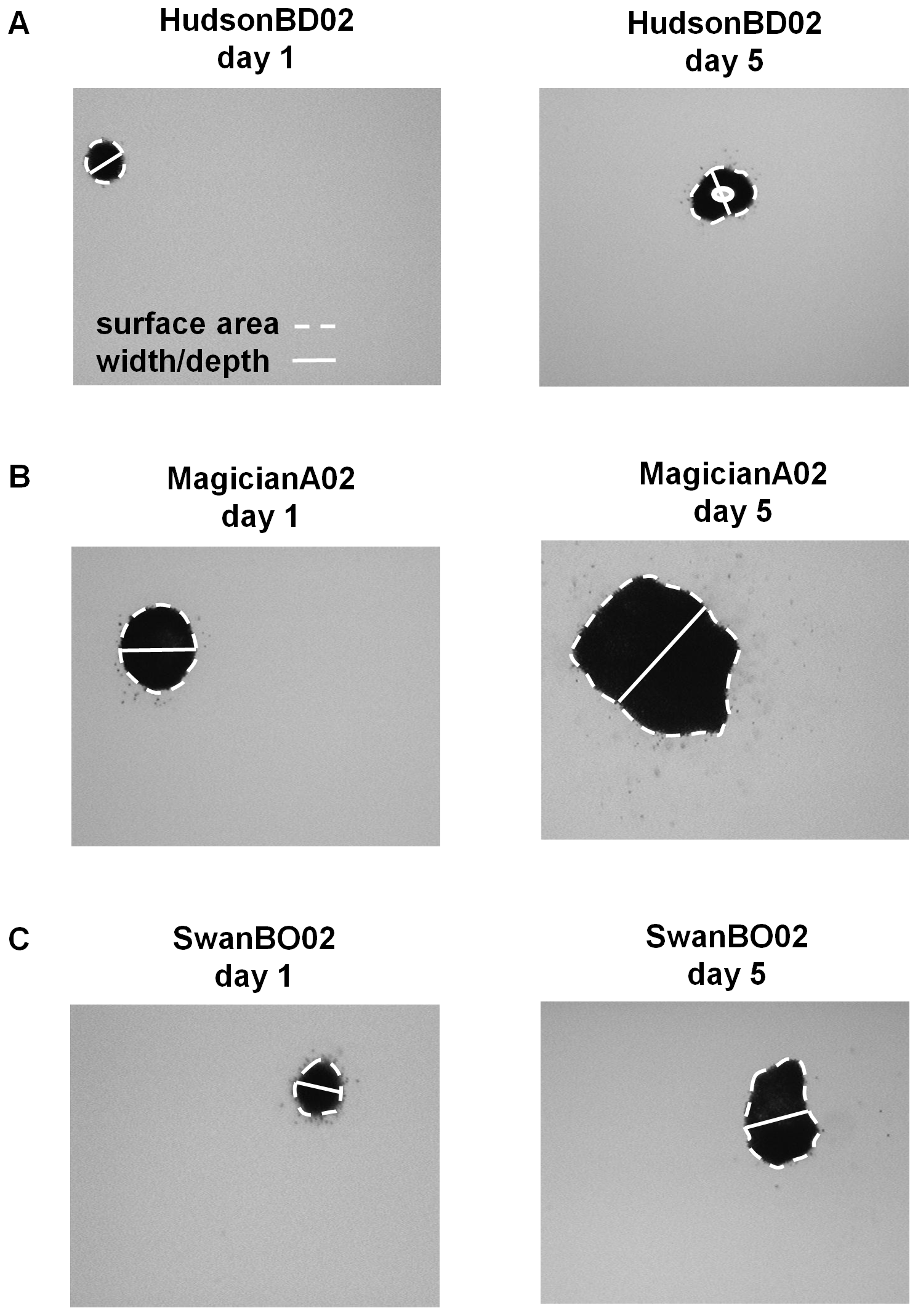
Abstract

Background

Allometric studies have shown that individual growth rate is inversely related to body size across a broad spectrum of organisms that vary greatly in size. Fewer studies have documented such patterns within species. No data exist directly documenting the influence of colony size on growth rate for microscopic, colonial organisms.

Methodology/Principal Findings

To determine if similar negative relationships between growth rate and size hold for colonial organisms, we developed a technique for measuring the growth of individual colonies of a bloom-forming, toxic cyanobacterium, Microcystis aeruginosa using microscopy and digital image analysis. For five out of six genotypes of M. aeruginosa isolated from lakes in Michigan and Alabama, we found significant negative relationships between colony size and growth rate. We found large intraspecific variation in both the slope of these relationships and in the growth rate of colonies at a standard size. In addition, growth rate estimates for individual colonies were generally consistent with population growth rates measured using standard batch culture.

Conclusions/Significance

Given that colony size varies widely within populations, our results imply that natural populations of colonial phytoplankton exist as a mosaic of individuals with widely varying ecological attributes (since size strongly affects growth rate, grazing mortality, and migration speed). Quantifying the influence of colony size on growth rate will permit development of more accurate, predictive models of ecological interactions (e.g., competition, herbivory) and their role in the proliferation of harmful algal blooms, in addition to increasing our understanding about why these interactions vary in strength within and across environments.

Keywords

Link to Publication

Citation

Sarnelle, O. and A. E. Wilson. 2008. Type III functional response in DaphniaEcology 89(6):1723-1732.

Abstract

The functional response of Daphnia, a common pelagic herbivore in lakes, was assessed with a combination of secondary and meta-analyses of published data and new data from an experiment conducted using very low food levels. Secondary analyses of literature data (28 studies, n = 239-393) revealed a significant positive influence of food concentration on Daphnia clearance rate at low food levels, i.e., evidence of an overall Type III functional response. This result was not an artifact of including data from Daphnia that were exhausted from prolonged food deprivation (more than three hours at very low food). Meta-analysis of Daphnia clearance rate vs. food concentration across a range of low food concentrations (eight studies) showed a significantly positive slope across studies, which also supports the presence of a Type III response. Congruent with these analyses of published data, the feeding experiment showed clear evidence of a Type III functional response for D. pulicaria feeding on Ankistrodesmus falcatus. Food levels at which Daphnia clearance rate declined with decreasing food were near the minimum resource requirement for Daphnia population maintenance at steady state (R*). We suggest that Type III responses are more common than previously believed, perhaps because of the relative paucity of observations at low food levels, and that reduced prey mortality at low phytoplankton densities could be a stabilizing mechanism for Daphnia-phytoplankton systems under resource scarcity.

Keywords

Link to Publication

Citation

Tillmanns, A. R., A. E. Wilson, F. R. Pick, and O. Sarnelle. 2008. Meta-analysis of cyanobacterial effects on zooplankton population growth rate: species-specific responses. Fundamental and Applied Limnology 171(4):285-295.

Abstract

We analyzed a large data set of laboratory experiments to examine the effects of cyanobacteria containing or lacking intracellular toxic metabolites and of different morphology on zooplankton population growth rates across multiple genera and species of cladocerans, rotifers and cyanobacteria. Twenty-one of the 29 zooplankton species maintained positive growth rates when fed a diet containing cyanobacteria even though cyanobacteria were a poor food source for half of the zooplankton species tested relative to a diet containing only green algae and/or flagellates. Differences among zooplankton species could not be explained by grazer species body lengths, even when experiments were restricted to those that used only filamentous cyanobacteria. Single-celled cyanobacteria were more detrimental to a larger number of zooplankton species compared to filamentous or chroococcoid colonial cyanobacteria. We also found no clear effect of putative cyanobacterial toxins on the growth of seven zooplankton species but we did detect a negative effect for the largest cladoceran species, Daphnia magna. Among the cyanobacterial genera, Microcystis had the largest negative effect on zooplankton population growth and there was no consistent difference between M. aeruginosa strains that produced microcystins and those that did not. Our results highlight the large variation in species-specific responses of zooplankton to cyanobacteria. Although cyanobacterial toxicity and mechanical interference may be important drivers in particular cyanobacteria-zooplankton interactions, we did not find general support for these mechanisms through the use of this meta-analysis.

Keywords

Link to Publication

Citation

Knoll, L. B., O. Sarnelle, S. K. Hamilton, C. E. H. Kissman, A. E. Wilson, J. B. Rose, and M. R. Morgan. 2008. Invasive zebra mussels (Dreissena polymorpha) increase cyanobacterial toxin concentrations in low-nutrient lakes. Canadian Journal of Fisheries and Aquatic Sciences 65(3):448-455.

Abstract

We investigated whether concentrations of the cyanobacterial toxin microcystin were positively associated with Dreissena polymorpha invasion by conducting surveys of 39 inland lakes in southern Michigan with low to moderate total phosphorus concentrations (≤20 μg·L-1). Lakes with D. polymorpha had 3.3 times higher microcystin concentrations and 3.6 times higher biomass of Microcystis aeruginosa (a major producer of microcystin) than comparable lakes without D. polymorpha. In contrast, the biomass of Anabaena spp. (another potential producer of microcystin) was 4.6 times higher in lakes without D. polymorpha. We also conducted a large-scale enclosure manipulation of D. polymorpha density in Gull Lake, a low-nutrient lake containing D. polymorpha. The experiment revealed a positive effect of D. polymorpha on microcystin concentrations and M. aeruginosa biomass. The congruence between survey and experimental results provides strong evidence that D. polymorpha invasion causes an increase in toxin concentrations in lakes with low to moderate nutrients. An increase in M. aeruginosa biomass may negatively impact food webs and public health because microcystins are known to be toxic to aquatic and terrestrial organisms.

Keywords

Link to Publication